

- The first 10–14 days after a hair transplant are the most sensitive period, when grafts are still anchoring into the scalp.
- Direct sun exposure and solarium use should be avoided for several weeks; a loose hat and shade are your friends early on.
- Swimming in the sea or a chlorinated pool typically waits around 3–4 weeks, sometimes longer, because of infection and irritation risks.
- Light walking can begin within days, but sweaty, high-intensity exercise usually resumes gradually from roughly week 2 to week 4.
- Hair dye and chemical treatments are generally postponed for around 4–6 weeks to protect the healing scalp.
- A gentle haircut with scissors is possible earlier than clippers on the recipient area; timing varies, so confirm with your clinic.
- Alcohol and smoking are best minimised in the early days because they can affect healing and comfort.
- These are estimates only. Your surgeon's personalised aftercare instructions always take priority over any general timeline.
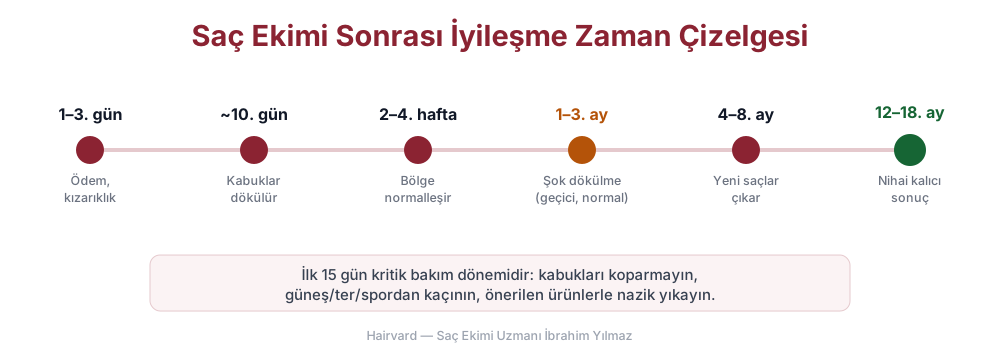
Why Timing Matters After a Hair Transplant
A hair transplant relocates hair follicles from a donor area (usually the back of the head) into thinning or bald regions. Whether performed by FUE, DHI, or another modern technique, the procedure creates tiny channels and micro-wounds in the recipient area. In the first days, the transplanted grafts are held in place largely by delicate early healing and the body's natural clotting process. They have not yet developed a robust blood supply of their own.
This is why the early recovery window is treated with such care. Activities that raise blood pressure sharply, cause heavy sweating, expose the scalp to sun or contaminated water, or introduce friction can all add unnecessary stress to healing tissue. The goal of an activity timeline is not to make life difficult, but to protect your investment and keep the recovery as smooth and comfortable as possible.
It helps to think of recovery in phases. For a fuller phase-by-phase overview, see our dedicated recovery timeline, and for step-by-step cleansing guidance, our article on washing.
| Recovery phase | Approximate timing | What is happening | General mindset |
|---|---|---|---|
| Immediate | Days 0–3 | Grafts most fragile; scabbing begins | Rest, protect, minimal touching |
| Early healing | Days 4–10 | Scabs form and start to loosen; gentle washing routine | Careful and gentle |
| Consolidation | Weeks 2–4 | Scabs gone; redness fading; grafts more secure | Gradual return to normal |
| Shedding & settling | Weeks 4–12 | "Shock loss" of transplanted hairs is common and expected | Patience |
| Regrowth | Months 3–12+ | New hairs begin and thicken over time | Long-term view |
Sun and Solarium: When Can I Go Outside Again?
Sunlight is one of the most underestimated risks in early recovery. A freshly transplanted scalp is more vulnerable to UV damage, and sunburn on healing skin can cause discomfort, prolonged redness, and pigmentation changes in the sensitive recipient area.
You do not need to hide indoors, but direct, prolonged sun exposure on the scalp should be avoided in the first weeks. When you go out, seek shade and consider a loose-fitting hat once your clinic confirms it will not disturb the grafts (very early on, even a hat can create friction, so timing matters). Solariums and tanning beds concentrate UV exposure and are best avoided for an extended period.
| Activity | Estimated timing | Practical tips |
|---|---|---|
| Brief time outdoors in shade | From the first days | Avoid midday sun; stay in shade |
| Wearing a loose hat outdoors | Often around days 5–10 | Only once your clinic approves; keep it loose |
| Direct sun on the scalp | Generally avoid for ~4 weeks, minimise for longer | Use shade and coverings |
| Solarium / tanning bed | Typically avoid for several weeks or more | Ask your clinic before resuming |
| Sunscreen on the scalp | Usually once healing is well advanced | Only when your clinic says the skin is ready |
Note that sunscreen is not applied to the raw recipient area in the earliest days. Physical protection (shade and coverings) comes first, and topical products are introduced only when your clinic confirms the skin has healed enough.
Sea and Pool: When Can I Swim?
Water activities combine several risks: potential bacteria in the sea, chlorine and other chemicals in pools, sun exposure at the beach, and the physical impact of waves or diving. For these reasons, swimming is usually one of the later activities to resume.
Sea and pool swimming is commonly postponed for roughly 3–4 weeks, and sometimes longer depending on how your scalp is healing. Chlorinated pools can irritate sensitive skin, and natural bodies of water can carry a higher infection risk. When you do return, ease back in gently and rinse your scalp with clean water afterward.
| Water activity | Estimated timing | Key considerations |
|---|---|---|
| Warm shower (body) | Typically the day after, per instructions | Keep pressure off grafts initially |
| Gentle scalp washing | Usually begins days 2–3 per clinic protocol | Follow the washing guide precisely |
| Chlorinated pool | Often around 3–4 weeks | Chlorine can irritate; rinse afterward |
| Sea swimming | Often around 3–4 weeks or more | Watch for sun and infection risk |
| Hot tubs / saunas / steam | Frequently 4 weeks or more | Heat and sweat can stress healing skin |
| Diving / water sports | Later, once fully healed | Impact and pressure add extra risk |
Exercise and Sport: When Can I Work Out?
Movement is good, but sweat and spikes in blood pressure are the concern. Heavy sweating can irritate the recipient area and increase infection risk, while intense straining can affect the delicate early healing. The general approach is a gradual return, starting with the lightest activities.
Gentle walking can usually begin within a few days. Light activity tends to resume from around week 2, moderate exercise from around weeks 2–3, and heavy lifting, contact sports, or high-intensity training often from around week 4 or later. Listen to your body and your clinic.
| Type of exercise | Estimated timing | Notes |
|---|---|---|
| Gentle walking | Within the first few days | Avoid overheating |
| Light cardio (easy pace) | Around week 2 | Keep sweating modest |
| Moderate gym / weights | Around weeks 2–3 | Avoid heavy straining |
| Heavy lifting / HIIT | Around week 4+ | Sweat and pressure spikes are the concern |
| Contact / combat sports | Typically week 4+ or later | Impact risk to the scalp |
| Swimming as exercise | Around 3–4 weeks+ | See swimming section above |
If your job is physically demanding, discuss this with your clinic before your procedure so you can plan appropriate time off.
Hair Dye and Chemical Treatments: When Can I Colour My Hair?
Hair dye contains chemicals such as ammonia and peroxide that can irritate healing skin and potentially affect sensitive follicles. Because of this, colouring is generally postponed for around 4–6 weeks, and some clinics advise waiting longer to be cautious.
The same logic applies to other chemical processes like bleaching, perming, and keratin treatments. When you do colour again, a patch test and a gentler, ammonia-free product may be sensible options to discuss with your stylist.
| Treatment | Estimated timing | Why the wait |
|---|---|---|
| Hair dye / colour | Around 4–6 weeks (often longer advised) | Chemical irritation of healing scalp |
| Bleaching | Typically 6 weeks or more | Harsher on skin and hair |
| Perming / straightening chemicals | Typically 6 weeks or more | Strong chemicals plus heat |
| Keratin / smoothing treatments | Usually several weeks | Chemicals and heat exposure |
| Styling products (gel, wax, spray) | Once healing is well advanced | Ask your clinic first |
Remember that the donor area also needs consideration, and that transplanted hairs commonly shed before regrowing, so colouring soon after surgery offers limited benefit anyway.
Haircut and Barber: When Can I Get a Trim?
This is a nuanced one because the recipient and donor areas heal on different schedules, and the method matters. Scissors are gentler than clippers, and clippers on the recipient area are typically avoided for a considerable period to prevent disturbing the new grafts.
A careful scissor trim of longer hair, avoiding the recipient area, may be possible earlier, but many clinics prefer you wait until healing is well established. Clipper cuts on the recipient area are often delayed for several months. Always tell your barber you have had a hair transplant, and ideally wait for your clinic's green light.
| Haircut method | Area | Estimated timing |
|---|---|---|
| Scissor trim (longer hair) | Away from recipient area | Often a few weeks, once healed |
| Scissors on recipient area | Recipient area | Later, per clinic guidance |
| Clippers with guard | Non-recipient areas | Once well healed, ask clinic |
| Clippers on recipient area | Recipient area | Frequently several months |
| Donor area trim | Donor area | Usually heals sooner; confirm timing |
Because timelines here vary so widely between individuals and clinics, this is a question best answered directly by your surgical team based on how your scalp looks.
Alcohol, Smoking, Sex, and Other Everyday Questions
Beyond the big categories, patients ask about many day-to-day activities. Alcohol can thin the blood and may affect healing and swelling, so it is commonly minimised in the first days to a week. Smoking and vaping can impair blood flow, which matters for graft healing, so reducing or pausing is frequently advised around the procedure.
Intimacy and sex raise blood pressure and can cause sweating, so a short pause of a few days is often suggested, with care taken to avoid any friction or contact with the recipient area. Sleeping position also matters early on, and many clinics recommend keeping the head slightly elevated.
| Activity | Estimated timing | Notes |
|---|---|---|
| Alcohol | Often avoided ~5–7 days | Can affect healing and swelling |
| Smoking / vaping | Reduce or pause around the procedure | Affects blood flow to grafts |
| Sexual activity | Often a short pause of a few days | Avoid sweating and scalp contact |
| Returning to desk work | Frequently within a few days | Depends on comfort |
| Wearing a helmet / hard hat | Typically weeks, once healed | Pressure and friction risk |
| Flying / travel | Often possible soon, protect the scalp | Confirm with your clinic |
| Sleeping flat | Elevation often advised early on | Reduces swelling risk |
If you are considering a procedure, note that a hair transplant at a licensed clinic typically falls in the range of EUR 2,200–4,800 depending on the technique and the number of grafts. Any medications that may be recommended as part of your plan should only be used under medical supervision.
Your Personalised Clinic Instructions Come First
Every timeline in this article is a general estimate. The single most important source of guidance is the personalised aftercare plan you receive from your own clinic, tailored to your technique, the number of grafts, your scalp condition, and how your healing progresses. If your clinic's instructions differ from anything here, follow your clinic.
When in doubt, ask before you act. A quick message to your surgical team is always better than guessing about an activity that could stress your healing scalp. Keep your follow-up appointments, and report anything unusual such as spreading redness, significant swelling, discharge, or fever promptly.
Frequently Asked Questions
When can I go in the sun after a hair transplant?
Direct sun on the scalp is generally avoided for around four weeks, and minimised for longer. In the meantime, stay in the shade and use a loose hat only once your clinic approves.
When can I use a solarium or tanning bed?
Solariums concentrate UV exposure and are typically avoided for several weeks or more. Ask your clinic to confirm when your skin has healed enough.
When can I swim in the sea?
Sea swimming is commonly postponed for around three to four weeks or longer, because of infection risk, sun exposure, and the physical impact of waves. Rinse with clean water afterward once you resume.
When can I swim in a chlorinated pool?
Pool swimming is usually possible from around three to four weeks. Chlorine can irritate a healing scalp, so rinse your head with clean water after swimming and confirm timing with your clinic.
When can I go back to the gym?
Light activity often resumes around week two, moderate workouts around weeks two to three, and heavy lifting or high-intensity training from around week four. The main concerns are heavy sweating and spikes in blood pressure.
When can I dye my hair after a transplant?
Hair colouring is generally postponed for around four to six weeks, and often longer, because dye chemicals can irritate healing skin. A patch test and a gentler product are worth discussing with your stylist.
When can I get a haircut?
A careful scissor trim away from the recipient area may be possible after a few weeks, while clippers on the recipient area are frequently delayed for several months. Always tell your barber about your transplant and follow your clinic's guidance.
When can I drink alcohol?
Alcohol is commonly avoided for roughly five to seven days because it can affect healing and swelling. Reintroduce it gradually and moderately once your clinic is comfortable.
When can I have sex again?
Because intimacy raises blood pressure and can cause sweating, a short pause of a few days is often suggested, taking care to avoid any friction or contact with the recipient area.
When can I wear a hat or helmet?
A loose hat is often permitted from around days five to ten with clinic approval, but tight helmets or hard hats that press on the scalp are usually avoided for weeks until healing is well established.
When can I sleep normally?
Many clinics recommend keeping your head slightly elevated for the first several nights to reduce swelling, and avoiding sleeping directly on the recipient area. Your clinic will advise when you can return to your usual position.
When will I see results?
Transplanted hairs commonly shed within the first weeks, which is expected. New growth typically begins around months three to four and continues to thicken over the following months, with fuller results developing over a year or more. No specific outcome can be guaranteed.
This article was medically reviewed by hair transplant specialist Ibrahim Yilmaz. For guidance tailored to your own scalp and recovery, book a free hair analysis with our team, who can provide personalised activity timelines and aftercare advice.