

Hair transplantation is one of the most rewarding investments you can make in your appearance, but its success depends on far more than the skill of your surgeon on the day of the procedure. What you do with your own body before and after surgery plays a decisive role in how well your transplanted follicles survive and grow. Few habits interfere with this process as directly and as powerfully as smoking. If you use cigarettes, cigars, vapes, or any nicotine product, understanding how it affects healing is one of the most important things you can do to protect your result.
Key Takeaways
- Nicotine narrows blood vessels and reduces oxygen delivery to the scalp, which is exactly what freshly transplanted grafts need most during healing.
- The revascularization period, when grafts reconnect to your blood supply, is the most vulnerable window and is where smoking causes the greatest harm.
- Most specialists advise stopping smoking at least 1 to 2 weeks before surgery and staying smoke-free for at least 2 weeks afterward, with longer being better.
- Vaping and nicotine pouches are not a safe substitute; the nicotine itself is the primary problem, not only the smoke.
- Alcohol thins the blood, promotes bleeding and swelling, and can interact with medications, so it should also be paused around surgery.
- Smoking can contribute to poor graft survival, delayed healing, more visible scarring, and in some cases folliculitis or skin necrosis.
- No clinic can guarantee a specific result, but quitting nicotine measurably improves the biological conditions your grafts depend on.
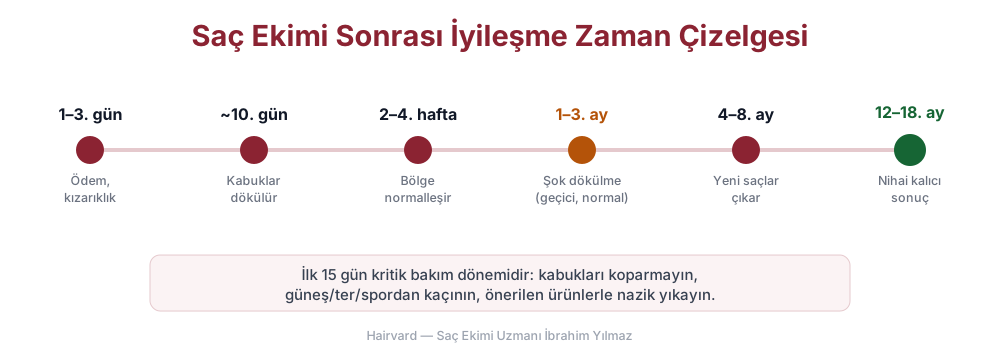
Why Blood Supply Is Everything After a Hair Transplant
To understand why smoking is so damaging, you first need to understand what happens to a hair follicle once it is moved. During a transplant, thousands of follicular units are extracted from the donor area at the back of the head and placed into tiny incisions in the recipient area. At the moment of placement, these grafts are effectively cut off from a blood supply. They survive on nutrients diffusing from the surrounding tissue until new blood vessels grow into them, a process called revascularization.
This reconnection is not instant. In the first hours and days after surgery, grafts rely on plasma and oxygen seeping in from nearby tissue. Over roughly the following one to two weeks, new microscopic blood vessels form and begin to nourish each follicle directly. Until that network is established, the graft is fragile and highly dependent on a healthy, well-oxygenated wound bed. Anything that reduces blood flow or oxygen during this period puts survival at risk.
This is the biological reason your surgeon cares so much about your circulation. A follicle that does not receive enough oxygen may not enter its new growth cycle, and in the worst cases it simply fails to take. You can read more about how this recovery unfolds week by week in our hair transplant recovery timeline.
How Nicotine and Smoke Interfere With Healing
Smoking harms healing through several mechanisms at once, and it helps to separate them because they explain why simply "smoking a little less" is not an adequate solution.
Nicotine is a potent vasoconstrictor, meaning it causes blood vessels to narrow. Narrower vessels carry less blood, and less blood means less oxygen and fewer nutrients reaching the scalp precisely when the grafts need them. This effect begins within minutes of using nicotine and can persist for a while after each exposure.
Carbon monoxide from cigarette smoke binds to red blood cells in place of oxygen. This means the blood that does reach your scalp carries less usable oxygen than it should, compounding the problem created by narrowed vessels.
Smoking also affects the blood itself and the healing response. It can make blood more prone to clotting, impair the function of immune cells that clear debris and fight infection, and interfere with collagen formation, which the body needs to repair wounds. Together these effects slow healing and raise the risk of complications.
| Factor | What it does | Effect on grafts |
|---|---|---|
| Nicotine | Constricts blood vessels | Less oxygen and fewer nutrients reach follicles |
| Carbon monoxide | Displaces oxygen on red blood cells | Blood delivers less usable oxygen |
| Increased clotting tendency | Alters blood flow in tiny vessels | Poorer microcirculation around grafts |
| Impaired immune cells | Weakens infection defense | Higher risk of folliculitis and infection |
| Reduced collagen formation | Slows tissue repair | Delayed healing and potentially worse scarring |
Does Vaping or Nicotine Replacement Make a Difference?
A common assumption is that switching from cigarettes to a vape, a heated tobacco product, or nicotine pouches makes the habit safe around surgery. Unfortunately, this reasoning misses the main problem. The single most damaging component for graft survival is nicotine itself, because of its vasoconstricting effect, and every one of these products delivers nicotine.
Vaping avoids some of the combustion by-products of burning tobacco, but it still introduces nicotine and other compounds that can affect blood vessels and healing. Heated tobacco and pouches are in the same position. For the purposes of protecting your grafts, the safest assumption is that any nicotine source should be treated like smoking and stopped within the same timeframe.
Nicotine replacement therapy such as patches or gum is sometimes discussed as a way to manage cravings while quitting. Because these also contain nicotine, any use around the time of surgery should only happen under medical supervision, so that the benefit of not smoking is weighed against the vasoconstricting effect of the replacement product.
| Product | Contains nicotine | Combustion by-products | Advisable around surgery |
|---|---|---|---|
| Cigarettes | Yes | Yes | No, stop before and after |
| Cigars / pipe | Yes | Yes | No, stop before and after |
| Vape / e-cigarette | Yes | Reduced | No, treat like smoking |
| Heated tobacco | Yes | Reduced | No, treat like smoking |
| Nicotine pouches / gum | Yes | None | Only under medical supervision |
How Long Should You Quit Before and After Surgery?
There is no single number that fits every patient, and honest guidance means acknowledging that. That said, the general principles are well established, and most experienced clinics converge on similar advice. The longer you stay nicotine-free around your procedure, the more you tilt the odds in favor of healthy healing.
Before surgery, the goal is to give your circulation time to recover from the chronic effects of nicotine, so your scalp starts from the best possible baseline. After surgery, the goal is to protect the critical revascularization window when grafts are most vulnerable. Because both matter, quitting is valuable on both sides of the operation.
| Timeframe | Recommendation | Why it matters |
|---|---|---|
| 2+ weeks before surgery | Ideal window to stop | Circulation and oxygen delivery improve before the procedure |
| 1 week before surgery | Minimum many clinics request | Reduces acute vasoconstriction on the day of surgery |
| Day of surgery | No smoking | Avoids narrowing vessels during and right after the procedure |
| First 2 weeks after | Most critical to stay smoke-free | Protects grafts during revascularization |
| Weeks 3-4 and beyond | Continue avoiding if possible | Supports ongoing healing and reduces complication risk |
It is worth being candid: many people cannot quit entirely, and some will smoke despite advice. If that describes you, the honest message is not that your result is ruined, but that you are adding avoidable risk. Reducing as much as possible, and especially protecting the first two weeks after surgery, is far better than doing nothing. Your surgeon would always rather have an open conversation about your real habits than base advice on assumptions.
Where Alcohol Fits Into the Picture
Alcohol is a separate issue from nicotine, but it belongs in the same conversation because it also affects healing and is often consumed alongside smoking. Alcohol thins the blood and can promote bleeding, which is unhelpful both during a procedure that involves thousands of tiny incisions and in the days afterward when you want clotting and healing to proceed smoothly.
Alcohol also contributes to dehydration and can worsen swelling, and it may interact with painkillers, antibiotics, or other medications prescribed around your surgery. For these reasons, it is generally sensible to avoid alcohol for a few days before surgery and for at least the first week or so afterward, or for as long as your medical team advises. As with any medication or substance, decisions about timing should be made under medical supervision based on your individual situation.
| Substance | Main concern | Suggested pause |
|---|---|---|
| Nicotine (all forms) | Vasoconstriction, reduced oxygen | ~2 weeks before, 2+ weeks after |
| Alcohol | Blood thinning, swelling, drug interactions | A few days before, ~1 week after |
What Poor Healing Can Look Like
When the scalp does not receive enough oxygen and healing is impaired, the consequences are not abstract. Reduced graft survival is the most important concern, because follicles that fail to establish a blood supply may not grow, which can mean thinner coverage than expected and, in some cases, the need for a touch-up procedure later.
Beyond survival, impaired healing can show up as slower recovery of the recipient and donor areas, more noticeable or wider scarring, and a higher chance of complications such as folliculitis, an inflammation around the follicles. In more severe cases, seriously compromised blood supply can contribute to skin necrosis, where tissue is damaged from lack of oxygen. These outcomes are not certainties, and they are more likely when heavy smoking combines with other risk factors, but they are the reason clinics take this topic seriously rather than treating it as a formality.
None of this is meant to frighten you. It is meant to explain, honestly, why the advice exists and why it is worth following. Good preparation genuinely improves your chances, even though no clinic can promise a specific outcome for any individual.
Preparing Well Improves Your Odds
The encouraging side of all this is that the biggest risk factors around smoking are within your control. Choosing to stop nicotine before your procedure, protecting the first weeks afterward, staying hydrated, and following your aftercare instructions all work in the same direction: toward the healthy, well-oxygenated scalp your grafts need. These steps do not guarantee a result, but they meaningfully improve the biological conditions that determine graft survival.
Preparation also includes practical planning, from arranging time off to organizing your aftercare supplies and understanding what to expect. Our guide to hair transplant preparation walks through these steps in detail so you arrive on the day in the best possible position.
At Hairvard, hair transplant procedures generally fall within a range of EUR 2,200 to 4,800, depending on the technique and the number of grafts required. Because a transplant is a meaningful investment of both money and hope, it makes sense to give it every advantage, and quitting nicotine is one of the most effective and lowest-cost things you can do to support your outcome.
Frequently Asked Questions
How long before a hair transplant should I stop smoking?
Most clinics recommend stopping at least 1 to 2 weeks before surgery, with 2 weeks or more being ideal. This gives your circulation time to recover so your scalp starts from a healthier baseline. The longer you can stop, the better the conditions for healing.
How long after a hair transplant do I need to avoid smoking?
The most critical period is the first 2 weeks after surgery, during revascularization, when grafts are reconnecting to your blood supply. Staying smoke-free for this window is essential, and continuing to avoid smoking for a month or more offers additional benefit for healing.
Is vaping safer than smoking after a hair transplant?
For graft survival, vaping is not a safe alternative. The main problem is nicotine, which narrows blood vessels and reduces oxygen to the scalp, and vapes deliver nicotine. Although vaping avoids some combustion by-products, it should be treated like smoking around your procedure.
Can I use nicotine patches or gum to help me quit around surgery?
Because patches and gum still contain nicotine, they carry the same vasoconstricting effect that harms grafts. If you want to use them to manage cravings during the surgical period, this should only be done under medical supervision so the pros and cons can be weighed for your situation.
Will smoking definitely ruin my hair transplant?
No outcome is certain either way. Smoking does not guarantee failure, but it adds avoidable risk by reducing oxygen delivery and impairing healing. Many people who smoke still grow hair, but they are stacking the odds against themselves compared with someone who quits.
What happens to grafts if I smoke during recovery?
Smoking during recovery constricts blood vessels and lowers oxygen exactly when grafts are trying to establish a new blood supply. This can reduce graft survival, slow healing, and increase the risk of complications such as folliculitis or, in severe cases, poor wound healing.
Does smoking affect the donor area too?
Yes. The donor area is also a healing wound that depends on good circulation. Impaired blood flow from smoking can slow donor-area healing and may contribute to more noticeable scarring, so protecting the donor site is another reason to avoid nicotine.
How much alcohol is safe before and after a hair transplant?
It is generally advised to avoid alcohol for a few days before surgery and for at least the first week afterward, because alcohol thins the blood, worsens swelling, and can interact with medications. Follow your medical team's specific guidance for your case.
If I cannot quit completely, is cutting down worth it?
Yes. While complete cessation is best, reducing your nicotine intake as much as possible, and especially protecting the first two weeks after surgery, lowers your risk compared with smoking normally. Being honest with your surgeon about your habits allows for the safest possible plan.
Should I tell my clinic if I smoke?
Absolutely. Your clinic needs an accurate picture of your habits to give you the right advice and to plan your care safely. There is no judgment involved; an honest conversation leads to better guidance and a safer procedure than assumptions ever could.
Can smoking cause my transplant to become infected?
Smoking impairs immune cells and slows healing, which can raise the risk of infection and folliculitis around the grafts. It does not make infection certain, but a well-oxygenated, healthy scalp is better equipped to resist infection during recovery.
Does quitting smoking improve hair growth in general?
Better circulation and oxygen delivery support healthier hair and scalp overall, so quitting is beneficial beyond the transplant itself. While it is not a treatment for hair loss on its own, it removes one factor that can work against your hair and your healing.
This article was medically reviewed by hair transplant specialist Ibrahim Yilmaz. It is intended for general education and does not replace a personal consultation. For tailored guidance on your own situation, you are welcome to book a free hair analysis with the Hairvard team, who can assess your needs and answer your questions with no obligation.