

Male pattern baldness, medically known as androgenetic alopecia, is the most common cause of hair loss in men, affecting roughly half of all men by age 50. It is driven by a combination of genetics and the hormone DHT (dihydrotestosterone), which gradually shrinks hair follicles until they stop producing visible hair. While it cannot be permanently cured, its progression can often be slowed or managed with medication, and lost density can be restored through a hair transplant.
Key Takeaways
- Male pattern baldness is genetic and hormonal, caused by the sensitivity of hair follicles to DHT, a byproduct of testosterone.
- It follows a predictable pattern, typically starting at the temples and crown, measured by the Norwood Scale (7 stages).
- It can begin as early as the late teens or early twenties, and around 50% of men show noticeable signs by age 50.
- The condition is progressive but manageable: medications like finasteride and minoxidil (used under medical supervision) can slow or stabilise loss.
- Hair transplantation is the only permanent way to restore hair to bald areas, relocating DHT-resistant follicles from the back of the head.
- Early diagnosis gives the best results, so acting at the first signs of thinning matters.
What Is Male Pattern Baldness?
Male pattern baldness (MPB) is a form of hair loss with a characteristic, recognisable shape. Unlike diffuse thinning or patchy loss from other conditions, it follows a distinct route: the hairline recedes at the temples, the crown thins, and over time these two zones can merge, leaving hair only around the sides and back of the scalp.
The reason the sides and back are spared is central to understanding the condition. Follicles in the "horseshoe" region at the back and sides of the head are genetically resistant to DHT. This is precisely why they are used as donor hair in transplant surgery, they keep growing even when relocated to a bald area.
Androgenetic alopecia is not a disease in the sense of being harmful to physical health. It carries no medical danger, but it can affect confidence and self-image, which is why so many men seek treatment. Understanding the mechanism helps set realistic expectations about what treatment can and cannot achieve. For a broader view of why hair falls out, see our guide to the causes of hair loss.
What Causes Male Pattern Baldness?
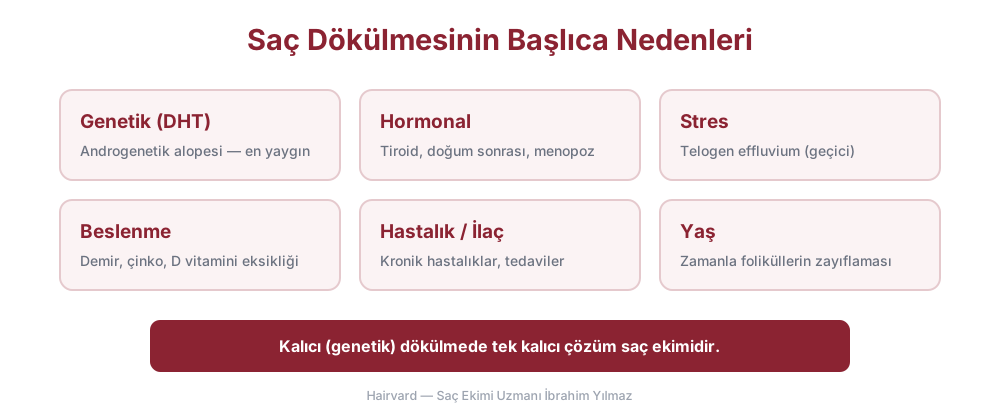
Two factors work together: genetics and hormones.
The Role of DHT
Testosterone is converted into dihydrotestosterone (DHT) by an enzyme called 5-alpha-reductase. In men who are genetically predisposed, hair follicles on the top of the scalp are sensitive to DHT. When DHT binds to receptors in these follicles, it triggers a process called miniaturisation.
With each growth cycle, the affected follicle shrinks. The hair it produces becomes progressively finer, shorter and lighter, until eventually the follicle produces only tiny, barely visible vellus hair, or stops producing hair altogether. This is a gradual process that unfolds over years, not months.
The Role of Genetics
Genetic predisposition determines how sensitive your follicles are to DHT. This inheritance is polygenic, meaning multiple genes are involved, and it can come from either side of the family, not only the maternal grandfather as the old myth suggests. If close male relatives experienced early balding, your own risk is higher.
| Contributing Factor | How It Influences MPB |
|---|---|
| DHT sensitivity | Primary driver; causes follicle miniaturisation over time |
| Genetics | Determines follicle sensitivity; inherited from both parents |
| Age | Cumulative DHT exposure increases loss with each decade |
| Ethnicity | Prevalence and severity vary between populations |
| Stress / lifestyle | Can worsen shedding but does not cause true MPB alone |
It is worth noting that stress, diet and lifestyle do not cause androgenetic alopecia. They can, however, aggravate general shedding or overlap with it, which sometimes makes the loss appear faster than it is.
The Norwood Scale: Stages of Male Pattern Baldness
Doctors classify the progression of male pattern baldness using the Norwood Scale (also called the Hamilton-Norwood Scale). It defines seven stages, from a full head of hair to advanced baldness. Knowing your stage helps determine the most suitable treatment and, for transplants, how many grafts may be needed.
| Norwood Stage | Description |
|---|---|
| Stage 1 | No significant recession; hairline intact |
| Stage 2 | Slight recession at the temples (mature hairline) |
| Stage 3 | Deeper temple recession; first stage of clinical baldness |
| Stage 3 Vertex | Recession plus noticeable thinning at the crown |
| Stage 4 | Larger bald areas at temples and crown, separated by a band of hair |
| Stage 5 | The band between the two zones narrows and thins |
| Stage 6 | The bridge of hair is gone; front and crown merge |
| Stage 7 | Most advanced; only a horseshoe band around the sides and back remains |
Most men do not progress through every stage, and the speed of progression varies greatly. Some stabilise at Stage 3 for decades, while others reach Stage 6 within a few years of onset.
Symptoms and Early Signs
The earliest signs are often subtle and easy to dismiss. Recognising them early gives you the widest range of treatment options.
- A receding hairline, especially at the temples, forming an "M" shape.
- Thinning at the crown, sometimes first noticed in photos taken from above.
- Finer, shorter hairs replacing thick ones in affected areas (miniaturisation).
- More scalp visible under bright light or when hair is wet.
- Slower regrowth and hair that no longer reaches its previous length.
One helpful distinction: male pattern baldness rarely causes sudden, dramatic shedding. If you are losing large clumps of hair quickly, or the loss is patchy or accompanied by itching and redness, another condition may be involved, and a professional assessment is important.
When Does It Start and How Fast Does It Progress?
Male pattern baldness can begin surprisingly early. A significant number of men notice the first signs in their late teens or early twenties. The likelihood increases steadily with age.
| Age Range | Approximate Share of Men Affected |
|---|---|
| Under 21 | Around 16% show early signs |
| By age 30 | Roughly 25% have noticeable loss |
| By age 40 | Around 40% affected |
| By age 50 | Roughly 50% affected |
| By age 60+ | Around 65% or more affected |
Figures are approximate population estimates and vary by ethnicity and study.
The rate of progression is highly individual. As a general rule, the earlier balding begins, the more advanced it is likely to become over a lifetime, which is one reason early intervention is often recommended for younger men.
Can Male Pattern Baldness Be Stopped?
This is the question most men want answered honestly. The truthful answer: it cannot be permanently cured, but its progression can very often be slowed or stabilised, particularly when treatment starts early.
Because the underlying cause is genetic follicle sensitivity to DHT, there is no treatment that removes the predisposition itself. What treatments do is either reduce DHT levels, stimulate the follicles that remain, or surgically replace lost hair with DHT-resistant follicles. Stopping treatment usually means loss resumes over time.
For a detailed, step-by-step approach to protecting the hair you still have, read our guide on how to stop hair loss.
Treatment Options
There is no single best treatment; the right choice depends on your Norwood stage, age, expectations and how the condition responds. Treatments broadly fall into three categories: medication, supportive therapies, and surgery.
Medications
Two medications have the strongest evidence base. Both should only be used under medical supervision, as they have potential side effects that a doctor should discuss with you.
- Finasteride is an oral medication that blocks 5-alpha-reductase, lowering scalp DHT. It can slow loss and, in many men, produce some regrowth. It works only while taken.
- Minoxidil is a topical solution or foam (also available orally under medical supervision) that prolongs the growth phase and improves blood flow to follicles. It is applied to the scalp and, like finasteride, must be continued to maintain benefit.
| Treatment | Type | Main Action | Key Consideration |
|---|---|---|---|
| Finasteride | Oral medication | Lowers DHT | Prescription only; used under medical supervision |
| Minoxidil | Topical / oral | Stimulates follicles | Must be continued long-term to keep results |
| PRP therapy | In-clinic injection | Stimulates existing follicles | Supportive; results are temporary without maintenance |
| Hair transplant | Surgery | Relocates resistant hair | Only permanent restoration for bald areas |
PRP and Supportive Therapies
Platelet-Rich Plasma (PRP) therapy involves drawing a small amount of your blood, concentrating the platelets, and injecting them into the scalp to stimulate existing follicles. It does not create new hair where follicles are already gone, but it can support existing hair and is sometimes used alongside medication or after a transplant. Low-level laser therapy is another supportive option with modest evidence.
Hair Transplantation
When medication is not enough, or when areas are already bald, a hair transplant is the only method that permanently restores hair. Healthy, DHT-resistant follicles are taken from the donor area at the back and sides of the head and relocated to the thinning or bald zones. Because these follicles keep their resistance to DHT, the transplanted hair continues to grow naturally in its new location.
Modern techniques such as FUE (Follicular Unit Extraction) and DHI (Direct Hair Implantation) allow individual follicular units to be moved with minimal scarring and natural-looking results. To understand the full procedure, recovery and what to expect, see our detailed guide: what is a hair transplant.
It is important to be realistic: a transplant redistributes existing hair rather than creating new hair. That is why many specialists recommend combining a transplant with medication to protect the non-transplanted native hair from continued loss.
Choosing the Right Approach by Stage
The following gives a general sense of how treatment tends to be matched to Norwood stage. An in-person assessment is always required for a personalised plan.
| Norwood Stage | Commonly Suitable Approach |
|---|---|
| Stages 1–2 | Monitoring; medication if progression is confirmed |
| Stage 3 | Medication first; transplant for stable hairline restoration |
| Stages 4–5 | Transplant plus medication to protect remaining hair |
| Stages 6–7 | Transplant possible if donor area is strong; realistic density planning essential |
At advanced stages, the size and quality of the donor area becomes the main limiting factor, since there is a finite number of follicles available to redistribute.
Frequently Asked Questions
At what age does male pattern baldness usually start?
It can start any time after puberty. Many men notice the first signs in their late teens or twenties, and the likelihood rises with each decade of life.
Is male pattern baldness inherited from the mother's side only?
No. This is a common myth. The genetic predisposition is polygenic and can be inherited from both parents, not just the maternal grandfather.
Does wearing hats or frequent washing cause baldness?
No. Hats, shampoos and normal washing do not cause androgenetic alopecia. The cause is genetic follicle sensitivity to DHT.
Can stress cause male pattern baldness?
Stress does not cause true male pattern baldness, but it can trigger a separate, usually temporary type of shedding called telogen effluvium, which may overlap with it.
How can I tell if my hair loss is male pattern baldness?
The pattern is the clue: gradual recession at the temples and thinning at the crown. Sudden, patchy, or diffuse loss suggests a different cause and should be assessed by a specialist.
Will male pattern baldness stop on its own?
It generally does not stop on its own. It tends to be progressive, though the speed varies and some men stabilise at a certain stage for many years.
Do finasteride and minoxidil really work?
For many men, yes, they can slow loss and produce some regrowth. Both work only while used and should be taken under medical supervision because of potential side effects.
Is a hair transplant permanent?
The transplanted follicles are DHT-resistant, so they typically continue to grow permanently. However, your original non-transplanted hair can still be lost over time, which is why medication is often advised alongside.
How many grafts will I need?
This depends on your Norwood stage, donor density and goals. Early stages may need a few thousand grafts, while advanced stages need more careful planning around donor supply.
Can I get a transplant at Norwood Stage 6 or 7?
Often yes, provided the donor area is strong enough. At advanced stages, density expectations must be realistic because the available donor hair is limited.
Does a transplant stop further balding?
No. A transplant restores lost areas but does not stop the genetic process affecting your native hair. Combining it with medication helps protect the rest.
How much does a hair transplant cost at Hairvard?
At Hairvard, hair transplant procedures range from EUR 2,200 to 4,800, depending on the technique and the number of grafts required. A personalised quote follows a hair analysis.
Is male pattern baldness dangerous to my health?
No. Androgenetic alopecia is not harmful to physical health. It is a cosmetic condition, though it can affect confidence and wellbeing.
What is the best first step if I am noticing thinning?
Get a professional hair analysis early. Diagnosing your stage and cause accurately opens up the widest range of effective options.
This article was medically reviewed by Ibrahim Yilmaz, Hair Transplant Specialist at Hairvard, a clinic in Atasehir, Istanbul licensed by the Turkish Ministry of Health. It is intended for general information and does not replace a personal medical consultation. If you are noticing hair thinning or loss, we invite you to book a free hair analysis with our team to receive honest, individual advice on the options best suited to you.