

Follow the instructions precisely.
Return ONLY the article markdown starting with the intro paragraph.
Hair mesotherapy is a minimally invasive scalp treatment in which a customised blend of vitamins, minerals, amino acids and growth-supporting compounds is delivered through fine micro-injections directly into the layer of skin surrounding your hair follicles. It is used to nourish weakened follicles, improve scalp circulation and support thicker, healthier hair, most often as part of a wider plan to slow hair loss or strengthen results after a hair transplant. While it is not a cure for genetic baldness, it can be a useful supportive therapy for the right candidate when performed by qualified professionals under medical supervision.
Key Takeaways
- Hair mesotherapy injects a tailored cocktail of vitamins, minerals and amino acids into the mesoderm of the scalp to nourish follicles and improve circulation.
- It is a supportive treatment, not a standalone cure for advanced genetic hair loss, and works best alongside other therapies.
- A typical plan involves several sessions spaced 1–2 weeks apart, followed by maintenance sessions.
- Mesotherapy and PRP differ: mesotherapy uses external nutrient formulas, while PRP uses your own concentrated blood platelets.
- It is commonly combined with hair transplant procedures to protect existing follicles and support healing.
- Side effects are usually mild and temporary; results are gradual and vary between individuals.
What Is Hair Mesotherapy?
Hair mesotherapy is a technique that places small amounts of active ingredients into the mesoderm — the middle layer of skin — across the areas of the scalp affected by thinning. The treatment was originally developed in aesthetic medicine and later adapted for trichology, the study of hair and scalp health. Rather than relying on products that sit on the surface of the skin, mesotherapy aims to deliver nutrients closer to the hair follicles where they may be more readily used.
The idea behind the treatment is straightforward. Hair follicles need a healthy environment and a steady supply of nutrients to produce strong hair. When circulation is poor or the scalp lacks certain building blocks, hair can become weaker, finer and more prone to shedding. By introducing a targeted formula directly into the scalp, mesotherapy attempts to create better conditions for hair growth.
It is important to be honest about what this treatment can and cannot do. Mesotherapy does not replace lost follicles, and it will not regrow hair in areas that are completely bald. Instead, it is best understood as a way to support and strengthen existing hair and to complement other proven approaches. If you want to understand the full picture of preventing shedding, our guide on how to stop hair loss explains where mesotherapy fits among other options.
What Is Inside the Mesotherapy Cocktail?
There is no single universal formula. A clinic will usually adjust the blend based on your scalp condition, the pattern of your hair loss and your overall health. That said, most mesotherapy solutions contain a combination of the following categories of ingredients.
| Ingredient group | Examples | Intended purpose |
|---|---|---|
| Vitamins | B-complex, biotin, vitamin H | Support follicle metabolism and keratin production |
| Minerals | Zinc, copper, magnesium | Contribute to healthy hair structure and enzyme function |
| Amino acids | Cysteine, arginine | Provide building blocks for keratin, the main hair protein |
| Antioxidants | Vitamin C-based compounds | Help protect follicle cells from oxidative stress |
| Circulation aids | Vasodilating compounds | Aim to improve blood flow to the scalp |
The exact composition should always be selected and administered by a trained medical professional. Any injectable ingredient carries the potential for reaction, so the choice of formula and dosage is a clinical decision rather than something to be attempted at home.
How Does Hair Mesotherapy Work?
The working principle combines two elements: nutrient delivery and micro-stimulation. The injected formula supplies the scalp with concentrated nutrients, while the act of injecting creates tiny controlled points of stimulation that may encourage local blood flow and the natural healing response of the skin.
Better local circulation can mean that follicles receive more oxygen and nutrients through the bloodstream, in addition to the substances injected directly. Over a course of sessions, the aim is to move follicles that are producing thin, weak hairs toward producing thicker, healthier strands. Because hair grows slowly and in cycles, changes are gradual and are usually assessed over several months rather than after a single visit.
It is worth repeating that individual responses differ. Some people notice reduced shedding and improved hair quality, while others see more modest changes. Realistic expectations, set during a proper consultation, are an essential part of a good treatment plan.
The Hair Mesotherapy Process Step by Step
Understanding what happens during a session can help you feel more comfortable and prepared. The table below outlines a typical process, although exact details vary between clinics.
| Step | What happens | Approximate time |
|---|---|---|
| Consultation | Scalp assessment, medical history review, plan and formula selection | 20–30 minutes |
| Preparation | Cleaning the scalp; optional topical numbing cream for comfort | 10–15 minutes |
| Injection | Fine micro-injections across the target zones of the scalp | 15–30 minutes |
| Aftercare guidance | Instructions on washing, sun exposure and activity | 5 minutes |
| Follow-up | Reviewing progress and scheduling the next session | Varies |
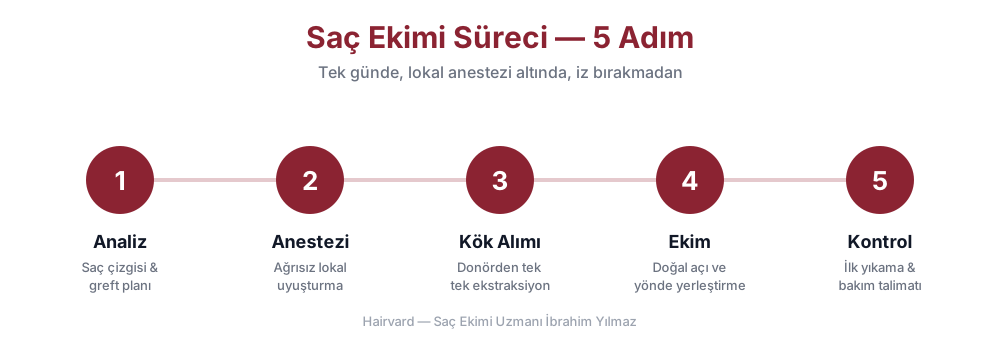
Most sessions are completed within an hour, and many people return to normal activities the same day. Because the needles used are very fine and the injections are shallow, discomfort is usually described as mild. A numbing cream can be applied beforehand for those who are sensitive.
How Many Sessions Are Needed?
Mesotherapy is not a one-time treatment. A common approach is an initial course of sessions delivered close together, followed by less frequent maintenance sessions to help preserve any improvement.
| Phase | Typical frequency | General duration |
|---|---|---|
| Initial phase | Once every 1–2 weeks | First 1–2 months |
| Consolidation phase | Once every 2–4 weeks | Following 2–3 months |
| Maintenance phase | Once every 1–3 months | Ongoing as advised |
The exact schedule depends on your scalp condition and how your hair responds. Your specialist will adjust the plan over time rather than following a fixed formula.
Who Is a Good Candidate?
Mesotherapy tends to be most useful for people in the earlier stages of hair thinning, where follicles are weakened but still active, rather than for those with long-established bald areas. It may be considered for:
- People noticing increased shedding or gradual thinning.
- Those wanting to support hair quality and scalp health.
- Patients looking for a supportive therapy alongside a hair transplant.
- Individuals whose hair loss is linked to stress, nutritional gaps or seasonal shedding, as part of a broader plan.
It is generally not suitable during pregnancy or breastfeeding, for people with certain skin infections of the scalp, bleeding disorders, or known allergies to any component of the formula. A thorough medical consultation is the only reliable way to know whether the treatment is appropriate for you. If you have significant baldness, a proper diagnosis may point toward other solutions; our overview of what a hair transplant is explains when surgical restoration becomes the more realistic option.
Mesotherapy vs PRP: What Is the Difference?
Both mesotherapy and platelet-rich plasma (PRP) are injectable scalp treatments, and they are sometimes confused. The core difference lies in what is being injected. Mesotherapy uses external formulas of vitamins and other compounds, while PRP uses a concentrate prepared from a sample of your own blood.
| Feature | Hair Mesotherapy | PRP |
|---|---|---|
| Substance injected | Vitamins, minerals, amino acids | Concentrated platelets from your own blood |
| Source | External pharmaceutical formula | Your own blood sample |
| Blood draw needed | No | Yes |
| Main aim | Nourish follicles, improve scalp condition | Use growth factors to stimulate follicles |
| Allergy consideration | Depends on formula ingredients | Very low, as it is autologous |
| Typical use | Supportive nourishment | Supportive stimulation |
Neither treatment is a guaranteed solution, and they are often discussed together because both are supportive rather than curative. Some clinics offer them as alternatives, and in certain cases they may be used at different stages of a plan. To understand the platelet-based approach in more depth, see our dedicated guide on PRP hair treatment.
Using Mesotherapy Alongside a Hair Transplant
Mesotherapy is frequently discussed in the context of hair transplant surgery. It does not replace a transplant, but it may be used as a supportive measure before or after the procedure. Before surgery, it may be used to improve the general condition of the scalp and existing hair. After surgery, it is sometimes used to help support the surrounding native hair and maintain scalp health during recovery.
The transplanted follicles themselves are taken from areas resistant to hair loss, so the main aim of adding mesotherapy is usually to look after the non-transplanted hair around them, which can still be vulnerable to thinning over time. Any combined plan should be designed by your surgical team, who will decide on timing so that the scalp is given appropriate time to heal after the transplant before further injections are considered.
This kind of combined, long-term thinking is common in hair restoration, because a transplant addresses areas that are already bald while supportive treatments aim to protect what remains.
Possible Side Effects and Safety
When performed by qualified professionals in a licensed clinic, hair mesotherapy is generally considered a low-risk procedure. However, no medical treatment is entirely without risk, and it is important to be aware of what can happen.
| Side effect | Frequency | Typical duration |
|---|---|---|
| Redness at injection sites | Common | A few hours to a day |
| Mild swelling or tenderness | Common | 1–2 days |
| Small bruising | Occasional | A few days |
| Temporary itching | Occasional | Short-lived |
| Infection | Rare | Requires medical attention |
| Allergic reaction | Rare | Requires medical attention |
Most side effects are mild and settle on their own. To reduce risks, treatment should only be carried out with sterile equipment, appropriate formulas and a clear understanding of your medical history. This is why choosing an experienced, properly licensed clinic matters far more than seeking the lowest possible price.
If you ever experience spreading redness, significant pain, fever or signs of an allergic reaction after a session, you should seek medical advice promptly. Honest aftercare guidance is part of responsible treatment, and reputable clinics will always explain warning signs to watch for.
Approximate Cost of Hair Mesotherapy
The cost of hair mesotherapy varies depending on the country, the clinic, the formula used and the number of sessions in your plan. Because it is usually delivered as a course rather than a single visit, it is most helpful to think in terms of the total plan rather than one appointment.
As a general guide, a single session is often priced modestly, but a full course of several sessions plus maintenance will add up over time. Many patients weigh this ongoing cost against other options, including a one-time hair transplant, which at Hairvard falls within a range of EUR 2,200 to 4,800 depending on the individual case. During a consultation, we can outline expected session numbers so you can understand the likely overall investment before committing.
Because pricing is highly individual, the most reliable figure comes from a personal assessment rather than a generic quote. We encourage you to compare the value and quality of care, not just the headline price, when making your decision.
Getting the Most From Your Treatment
Mesotherapy works best as part of a wider, consistent approach to hair health rather than as a quick fix. Combining it with good scalp care, a balanced diet, management of underlying health issues and, where appropriate, medically supervised treatments can give follicles a better overall environment.
Any medication such as minoxidil or finasteride should only be used under medical supervision, as suitability, dosage and monitoring differ from person to person. Your specialist can advise whether such treatments have a place alongside mesotherapy in your individual plan, and how to combine approaches safely.
Patience is essential. Because hair grows slowly, meaningful assessment usually takes several months. Keeping to your session schedule and following aftercare advice gives the treatment the best chance to support your hair.
Frequently Asked Questions
Is hair mesotherapy painful?
Most people describe the sensation as mild, since the needles are very fine and the injections are shallow. A numbing cream can be applied beforehand to improve comfort for those who are sensitive.
How soon will I see results?
Results are gradual because hair grows in slow cycles. Many people begin to assess changes after a few months of consistent sessions, though individual responses vary and no specific outcome can be guaranteed.
Is mesotherapy a permanent solution for hair loss?
No. It is a supportive treatment that aims to nourish and strengthen existing hair, not a permanent cure. Ongoing maintenance sessions are usually needed to help preserve any improvement.
Can mesotherapy regrow hair on completely bald areas?
It is not designed to regrow hair where follicles are no longer active. For fully bald areas, a hair transplant is generally the more realistic option, which you can read about in our hair transplant guide.
How is mesotherapy different from PRP?
Mesotherapy injects external vitamin and mineral formulas, while PRP injects a concentrate made from your own blood. Both are supportive rather than curative, and our PRP hair treatment guide explains the difference in detail.
How many sessions will I need?
This depends on your scalp condition and response, but an initial course often involves several sessions spaced one to two weeks apart, followed by maintenance sessions. Your specialist will tailor the schedule to you.
Can I combine mesotherapy with a hair transplant?
Yes, it is often used as a supportive measure before or after a transplant to help look after the surrounding native hair. Timing should be decided by your surgical team so the scalp can heal properly first.
Are there any side effects?
Most side effects are mild and temporary, such as redness, minor swelling or small bruising at the injection sites. Serious reactions like infection or allergy are rare but require prompt medical attention.
Who should avoid hair mesotherapy?
It is generally not advised during pregnancy or breastfeeding, or for people with scalp infections, bleeding disorders or allergies to the formula. A medical consultation is the only reliable way to confirm suitability.
Is there any downtime after a session?
Most people return to their normal daily activities the same day. You may be advised to avoid washing the scalp, direct sun exposure or intense exercise for a short period afterward.
Does mesotherapy work for everyone?
No treatment works the same for everyone. It tends to help most in earlier stages of thinning when follicles are still active, and results are more limited in advanced hair loss.
How should I choose a clinic for mesotherapy?
Prioritise clinics that are properly licensed, use sterile equipment and provide a thorough consultation and honest aftercare guidance. Experience and safety standards matter more than simply finding the lowest price.
This article was medically reviewed by Ibrahim Yilmaz, Hair Transplant Specialist at Hairvard, a clinic in Atasehir, Istanbul licensed by the Turkish Ministry of Health. It is intended for general information and does not replace a personal medical consultation. For tailored advice, we invite you to book a free hair analysis with our team to discuss whether hair mesotherapy or other treatments may be suitable for your individual needs.