

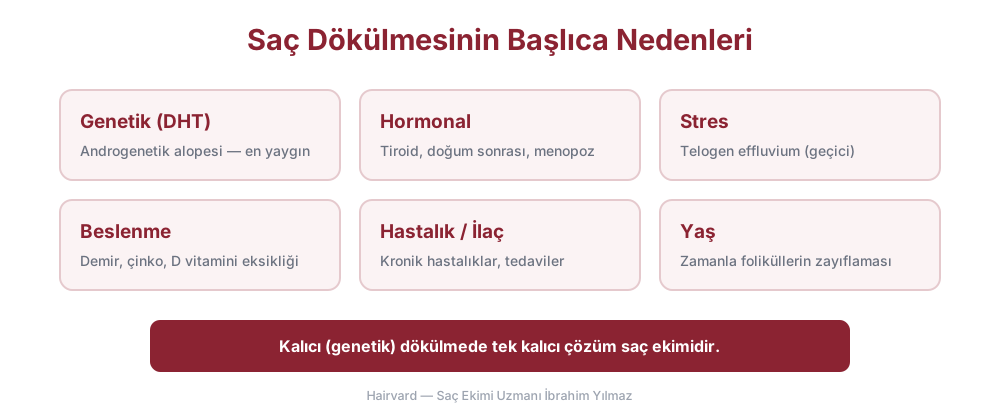
What causes hair loss? Hair loss happens when the natural growth cycle is disrupted by genetics, hormones, stress, nutritional gaps, illness, medication, or physical damage to the follicle. The most common cause worldwide is genetic (androgenetic) hair loss driven by the hormone DHT, but many other triggers are temporary and reversible once the underlying issue is addressed. Understanding which category you fall into is the first step toward the right treatment.
Key Takeaways
- Genetics and DHT cause the majority of long-term hair loss (male and female pattern) and are usually permanent without treatment.
- Hormonal shifts from thyroid disorders, childbirth, and menopause commonly trigger shedding that often reverses when hormones stabilise.
- Telogen effluvium from stress, illness, or surgery pushes hair into shedding 2–3 months after the trigger and typically recovers.
- Nutritional deficiencies in iron, zinc, vitamin D, and protein are frequent, often overlooked, and correctable causes.
- Traction and styling damage from tight hairstyles can become permanent if the follicle is scarred, so early change matters.
- A proper diagnosis separates temporary from permanent loss, which determines whether medication, lifestyle change, or a transplant is right for you.
The Hair Growth Cycle: Why Shedding Happens
Every hair follicle moves through a repeating cycle. Understanding it explains why some hair loss is normal and some is not.
- Anagen (growth): lasts 2–7 years; about 85–90% of your hairs are here at any time.
- Catagen (transition): a short 2–3 week phase where the follicle shrinks.
- Telogen (resting/shedding): lasts around 3 months, after which the hair falls out and a new one grows.
Losing 50–100 hairs a day is completely normal. Hair loss becomes a concern when more follicles enter the telogen phase at once, when the anagen phase shortens over time, or when follicles are permanently damaged. Each cause below disrupts this cycle in a different way.
1. Genetics and DHT (Androgenetic Alopecia)
Genetic hair loss, known as androgenetic alopecia, is by far the most common cause. It affects roughly half of men by age 50 and a significant proportion of women, often after menopause.
The mechanism is hormonal. Testosterone is converted into dihydrotestosterone (DHT) by an enzyme called 5-alpha reductase. In people who are genetically sensitive, DHT gradually shrinks the follicle in a process called miniaturisation. Each new hair grows thinner, shorter, and lighter until the follicle stops producing visible hair altogether.
In men this typically shows as a receding hairline and crown thinning, described in detail in our guide to male pattern baldness. In women it usually appears as diffuse thinning across the crown while the hairline is preserved.
Because the tendency is inherited and DHT-driven, this type of loss is progressive and permanent without intervention. The good news is that it responds to treatment: DHT-blocking medication can slow it, and follicles from the DHT-resistant "safe zone" at the back of the head can be relocated during a hair transplant.
2. Hormonal Causes
Hormones control much of the hair cycle, so any significant hormonal shift can trigger shedding. Unlike genetic loss, hormonal shedding is frequently temporary.
Thyroid Disorders
Both an underactive thyroid (hypothyroidism) and an overactive thyroid (hyperthyroidism) can cause diffuse thinning across the whole scalp. Hair often improves once thyroid hormone levels are corrected with treatment, though it can take several months.
Postpartum Hair Loss
During pregnancy, high oestrogen keeps more hairs in the growth phase, so hair looks fuller. After birth, hormone levels drop sharply and a large number of hairs enter the shedding phase at once. This postpartum shedding usually peaks around 3–4 months after delivery and resolves on its own within 6–12 months.
Menopause
Falling oestrogen and progesterone during and after menopause shift the balance toward androgens, which can unmask or accelerate genetic thinning. This loss can be partly hormonal and partly genetic, so it is worth a proper assessment.
3. Stress and Telogen Effluvium
A physical or emotional shock can force a large share of follicles into the resting phase prematurely. This condition is called telogen effluvium, and it is the second most common cause of hair loss after genetics.
The hallmark is a delay: the shedding appears 2–3 months after the trigger, which is why people often struggle to connect the two. Common triggers include:
- Severe emotional stress or grief
- Major surgery or a high fever
- Illness, including infections
- Crash dieting or rapid weight loss
- Stopping certain medications, including the contraceptive pill
Telogen effluvium is usually reversible. Once the trigger passes, hair generally regrows over 3–6 months. It becomes chronic only when the stressor is ongoing, which is why managing the underlying cause matters more than any product.
4. Nutritional Deficiencies
Hair is made of protein and grows rapidly, so it is sensitive to what you eat. Deficiencies are a common and correctable cause, especially in women of reproductive age and people on restrictive diets.
| Nutrient | Role in Hair | Common At-Risk Groups |
|---|---|---|
| Iron / ferritin | Carries oxygen to the follicle; low stores are strongly linked to shedding | Menstruating women, vegetarians |
| Zinc | Supports follicle repair and the growth cycle | Restrictive diets, gut disorders |
| Vitamin D | Involved in creating new follicles | Low sun exposure, darker skin |
| Protein | The raw material hair is built from | Very low-calorie or crash diets |
| B12 / biotin | Support red blood cells and keratin production | Vegans, malabsorption issues |
A simple blood test can identify most of these. Importantly, taking supplements you do not need rarely helps and, in the case of too much vitamin A or selenium, can actually cause hair loss. Correct deficiencies under medical supervision rather than guessing.
5. Illness and Medication
Certain medical conditions and drugs interfere with the hair cycle directly.
Autoimmune conditions such as alopecia areata cause the immune system to attack follicles, producing sudden round patches of loss. Conditions like lupus and scalp psoriasis, as well as scalp infections such as ringworm, can also cause shedding, sometimes with scarring.
Medications known to cause or contribute to hair loss include:
- Chemotherapy drugs (anagen effluvium, usually temporary)
- Blood thinners and some blood pressure medicines
- Certain antidepressants and anticonvulsants
- Retinoids (high-dose vitamin A derivatives)
- Some hormone therapies
If you suspect a medication is responsible, do not stop it on your own — speak to the prescribing doctor about alternatives.
6. Styling Damage and Traction Alopecia
This is the most preventable cause. Traction alopecia results from repeated tension on the hair from tight hairstyles — braids, weaves, extensions, tight ponytails, and buns. The constant pull damages the follicle over time, usually along the hairline and temples.
Heat styling, chemical relaxers, bleaching, and aggressive brushing add further stress by breaking the hair shaft. In its early stages traction alopecia is reversible if you change the styling habit. But if the tension continues for years, the follicle scars and the loss becomes permanent — at which point only a transplant can restore the area.
Temporary vs Permanent Hair Loss
The single most useful distinction is whether your follicles are still alive or have been permanently lost. This determines your treatment path.
| Cause | Typically Temporary or Permanent | Usual Recovery |
|---|---|---|
| Genetics / DHT | Permanent (progressive) | Needs medication or transplant |
| Thyroid imbalance | Temporary | Improves when levels corrected |
| Postpartum | Temporary | 6–12 months |
| Telogen effluvium (stress/illness) | Temporary | 3–6 months after trigger ends |
| Nutritional deficiency | Temporary | 3–6 months after correction |
| Medication-induced | Usually temporary | After stopping/changing drug |
| Alopecia areata | Variable | May regrow or recur |
| Traction (early) | Temporary | If styling changed early |
| Traction (scarred) | Permanent | Transplant only |
What to Do About It: A Step-by-Step Approach
Hair loss is rarely from a single cause, so a structured approach works best.
- Track the timeline. Note when shedding started and what happened 2–3 months before — illness, stress, childbirth, a new medication.
- Get a blood test. Ask your doctor to check iron/ferritin, thyroid, vitamin D, and zinc.
- Look at the pattern. Diffuse all-over thinning points to telogen effluvium or hormonal causes; a receding hairline or crown suggests genetics; patches suggest alopecia areata.
- Review medications and styling. Change tight hairstyles early and discuss any suspect drugs with your doctor.
- Consider proven treatments. Minoxidil and finasteride have the strongest evidence for genetic loss and should be used under medical supervision. Our detailed guide on how to stop hair loss explains the options.
- Explore restoration if loss is permanent. Where follicles are gone, a hair transplant relocates your own DHT-resistant hair to the thinning area.
The key principle: treat temporary causes with patience and correction, and permanent causes with proven medication or a transplant. A professional diagnosis prevents wasted time and money on the wrong approach.
When to See a Specialist
Book an assessment if you notice any of the following:
- Sudden or patchy hair loss
- Shedding that lasts longer than 6 months
- A widening part or visible scalp
- Loss accompanied by itching, pain, redness, or scaling
- A receding hairline or crown thinning that is progressing
Early diagnosis widens your options. Many causes respond far better when caught early, and even genetic loss is easier to manage before large areas are affected.
Frequently Asked Questions
How much hair loss per day is normal?
Losing 50 to 100 hairs a day is completely normal and part of the natural cycle. Consistently seeing far more than this, a thinning part, or clumps in the shower or on your pillow is worth investigating.
What is the most common cause of hair loss?
Androgenetic alopecia (genetic, DHT-driven hair loss) is the most common cause in both men and women. It is progressive and permanent without treatment, but it responds well to medication and hair transplantation.
Can stress really cause hair loss?
Yes. Significant physical or emotional stress can trigger telogen effluvium, pushing many follicles into shedding. The loss usually appears 2–3 months after the stressful event and typically recovers within 3–6 months once the stress resolves.
Is hair loss from a vitamin deficiency reversible?
In most cases, yes. Correcting deficiencies in iron, zinc, vitamin D, or protein under medical supervision usually restores growth over 3–6 months. Avoid over-supplementing, as excess vitamin A or selenium can worsen shedding.
Will my postpartum hair loss grow back?
Almost always. Postpartum shedding is a temporary hormonal response that peaks around 3–4 months after birth and resolves on its own within 6–12 months as hormone levels normalise.
Does wearing hats or hair products cause baldness?
No. Hats do not cause genetic baldness, and normal shampooing does not either. However, very tight hairstyles that pull on the roots can cause traction alopecia, and harsh chemical or heat treatments can break the hair shaft.
Can hair loss be a sign of a serious illness?
Sometimes. Thyroid disorders, autoimmune conditions, and severe infections can all cause shedding. This is why a blood test and, where needed, a specialist assessment are recommended rather than self-diagnosis.
Is female hair loss different from male hair loss?
Yes. Men typically develop a receding hairline and crown balding, while women more often experience diffuse thinning across the crown with the frontal hairline preserved. Women are also more likely to have a hormonal or nutritional trigger.
Can medication cause hair loss?
Yes. Chemotherapy, blood thinners, some blood pressure drugs, certain antidepressants, and high-dose retinoids can all contribute. Never stop a prescribed medication on your own — discuss alternatives with the prescribing doctor.
Is genetic hair loss preventable?
You cannot change your genes, but you can slow the process. Starting DHT-blocking treatment early, under medical supervision, can preserve existing hair for years. Once follicles are lost, a transplant is the way to restore them.
How do I know if my hair loss is permanent or temporary?
The pattern and cause are the clues. Diffuse shedding after a trigger is usually temporary, while a steadily receding hairline or crown, or scarred areas, tend to be permanent. A specialist can confirm with a scalp examination.
When should a hair transplant be considered?
A transplant is appropriate when hair loss is permanent — typically genetic loss or scarred traction alopecia — and the loss has stabilised. Because it uses your own DHT-resistant follicles, results look natural. Learn more in our guide to what a hair transplant involves.
Can hair grow back on its own?
For temporary causes — telogen effluvium, postpartum shedding, deficiency, or early traction alopecia — hair usually regrows once the underlying issue is fixed. Genetic loss and scarred follicles do not regrow without medical treatment or a transplant.
This article was medically reviewed by Ibrahim Yilmaz, Hair Transplant Specialist at Hairvard, a clinic in Atasehir, Istanbul licensed by the Turkish Ministry of Health. It is intended for general education and does not replace a personal medical consultation. For a tailored assessment, Hairvard offers a free hair analysis — our specialists will review your hair loss pattern and explain your options honestly, with no obligation.