

A hair transplant is a surgical procedure, and like any surgery it carries no absolute guarantee. Yes, a hair transplant can fail, or more commonly, it can fall short of what a patient hoped for. The good news is that genuine, total failure is uncommon when the right team performs the procedure on a suitable candidate who follows aftercare properly. Most disappointing results trace back to a handful of preventable mistakes, most of them made before the first incision is ever placed. This guide explains honestly what "failure" actually means, what causes it, how you can lower your risk to a minimum, and what your options are if a previous procedure did not go well.
Key Takeaways
- A true, complete failure is rare. Most poor outcomes are partial: thin coverage, patchy density, or an unnatural hairline rather than zero regrowth.
- The biggest risk factors are chosen before surgery, especially the experience of the team and whether you are a suitable candidate with a healthy donor area.
- Over-harvesting the donor zone is one of the most damaging and least reversible mistakes a clinic can make.
- Graft survival depends heavily on technique and handling during the few hours grafts spend outside the body.
- Aftercare is your responsibility, and neglecting it, especially in the first two weeks, can undo excellent surgical work.
- Most poor results can be improved through a carefully planned revision, though correction is harder than getting it right the first time.
What Does a "Failed" Hair Transplant Actually Mean?
The word "failure" gets used loosely, so it helps to separate genuine surgical failure from unmet expectations. They are not the same thing, and they have different causes and different fixes.
A complete failure means that the transplanted grafts largely did not survive, and little to no permanent hair grew in the recipient area after the full growth cycle of 12 to 18 months. This is genuinely uncommon.
A partial or aesthetic failure is far more frequent. Here the grafts grow, but the result looks wrong: the density is too low, the hairline sits at an odd height or shape, the hair points in unnatural directions, or the donor area is visibly depleted. The hair may be alive and healthy, yet the outcome still disappoints.
It is also important to understand what is not failure. Temporary shock loss, where existing native hairs and the newly implanted hairs shed in the first few weeks, is a normal and expected part of the process, not a sign that anything went wrong. Understanding the hair transplant recovery timeline helps you tell normal early stages apart from real warning signs.
| Type of Outcome | What You See | Is It Really Failure? |
|---|---|---|
| Complete failure | Little or no regrowth after 12–18 months | Yes, but genuinely rare |
| Partial / aesthetic failure | Grows, but thin, patchy, or unnatural | Yes, and the most common problem |
| Shock loss | Shedding of new and native hair in weeks 2–8 | No, this is normal and temporary |
| Slow growth | Sparse at 6 months, filling by 12–15 months | No, patience is required |
The Main Causes of Hair Transplant Failure
Almost every failed or disappointing transplant can be traced to one or more of the causes below. Reviewing them is the best way to understand what to look for, and what to avoid, when choosing a provider. To understand how the procedure is meant to work in the first place, it helps to read what a hair transplant is.
An Inexperienced or Poorly Supervised Team
This is the leading cause of poor results. A hair transplant is technically demanding and highly dependent on the skill of the people performing it. In some high-volume operations, the surgeon meets the patient briefly and most of the actual work is delegated to junior technicians with limited training. Grafts can be crushed during extraction, mishandled during placement, or implanted at the wrong depth. No aftercare can rescue grafts that were damaged before they went in.
Over-Harvesting the Donor Area
Your donor hair, usually from the back and sides of the scalp, is a finite, non-renewable resource. A clinic chasing maximum graft counts in a single session may extract too aggressively, leaving the donor zone permanently thin, patchy, or scarred. This is one of the most serious mistakes because it is very hard to correct: you cannot grow back donor hair that has been over-harvested, and it limits any future procedure.
Poor Angle, Direction, and Hairline Design
Natural hair grows in specific patterns, angles, and directions that change across the scalp. If grafts are placed at the wrong angle or pointing the wrong way, the result can look like doll's hair or a wig, even when density is adequate. A hairline that is too low, too straight, or too dense for the patient's age and face is a classic sign of poor planning rather than poor surgery.
Low Graft Survival
Grafts are living tissue and fragile once removed from the body. Their survival depends on how gently they are handled, how long they spend outside the scalp, the temperature and solution they are kept in, and how skilfully they are implanted. Rough handling, long out-of-body time, or a poorly prepared recipient site all reduce the percentage of grafts that ultimately take root and grow.
Infection and Poor Surgical Hygiene
Infection is uncommon in a properly run, licensed clinic, but when it occurs it can damage grafts and surrounding tissue. Unsanitary conditions, inadequate sterilisation, or poor post-operative wound care raise the risk. This is one reason the standard and licensing of the clinic matters so much.
Wrong Patient or Donor Selection
Not everyone is a good candidate. A patient with insufficient donor hair, very advanced or still-progressing hair loss, or certain scalp or health conditions may not achieve a good result no matter how skilful the surgeon. An honest clinic will sometimes tell a person that surgery is not the right choice, or that they should wait. A clinic that says yes to everyone is a warning sign.
Not Following Aftercare Instructions
Even flawless surgery can be undone in the first two weeks. Grafts need time to secure their blood supply, and during this window they are vulnerable. Smoking, drinking alcohol, intense exercise, scratching or picking at the scalp, sleeping incorrectly, sun exposure, or skipping prescribed care can all lower survival. This is the one cause fully within the patient's control.
| Cause of Failure | Who Controls It | How Damaging | Reversible? |
|---|---|---|---|
| Inexperienced team | Clinic | Very high | Sometimes, via revision |
| Over-harvested donor | Clinic | Very high | Rarely, very difficult |
| Poor angle / hairline design | Clinic | High | Often, via revision |
| Low graft survival | Clinic | High | Partially, via second procedure |
| Infection | Clinic + patient | Moderate to high | Usually, if treated early |
| Wrong candidate selection | Clinic | High | No, prevention only |
| Poor aftercare | Patient | Moderate to high | Partially, prevention is key |
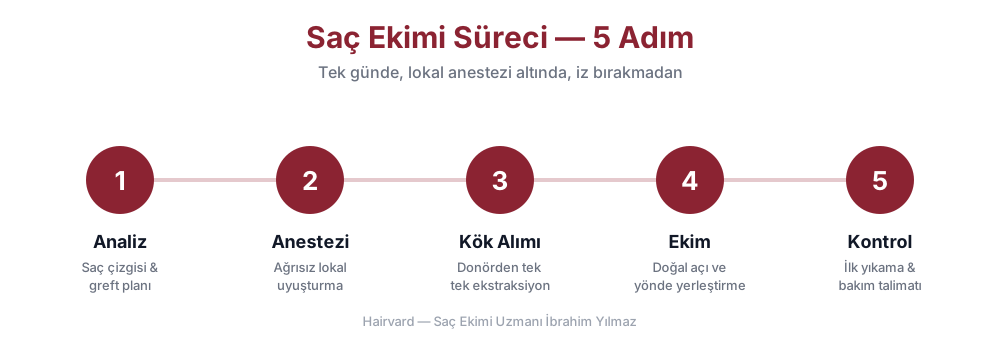
How to Prevent a Failed Hair Transplant
The reassuring reality is that most of the risk is preventable, and most of it is decided before you ever sit in the chair. Prevention is overwhelmingly about choosing well and preparing properly. The single most important decision is where and with whom you have the procedure, which is why it is worth taking real time over how to choose a hair transplant clinic.
Choose the Team, Not the Discount
Price should never be the deciding factor. Look for a licensed clinic, a qualified specialist who is genuinely involved in your procedure, and clear information about who will actually perform each stage. At Hairvard, procedures are led by specialist Ibrahim Yilmaz and the clinic is licensed by the Turkish Ministry of Health. Ask direct questions and expect direct answers.
Insist on a Proper Consultation and Realistic Plan
A trustworthy provider assesses your donor supply, examines your pattern of loss, discusses your long-term hair loss trajectory, and gives you an honest, specific plan. Be cautious of any consultation that promises a fixed graft number and a perfect result before properly examining you.
Protect the Donor Area
A good clinic harvests conservatively, thinking about your appearance in ten or twenty years, not just the density achievable today. Distributing extraction evenly and preserving enough donor hair for possible future work is a sign of a team that plans for the long term.
Prepare Your Body Before Surgery
Stopping smoking well in advance, moderating alcohol, managing any underlying health conditions, and disclosing all medications and supplements to your surgeon all improve your odds. Healthy tissue heals better and supports better graft survival.
Follow Aftercare Meticulously
Treat the written aftercare plan as non-negotiable. Sleep as instructed, avoid strenuous activity, keep the area clean exactly as directed, avoid smoking and alcohol, and attend follow-up appointments. The first two weeks matter most.
| Prevention Step | When | Why It Matters |
|---|---|---|
| Verify licensing and specialist involvement | Before booking | Reduces the single biggest risk |
| Get a thorough, honest consultation | Before booking | Confirms you are a suitable candidate |
| Confirm conservative donor planning | Before surgery | Protects finite donor hair long term |
| Optimise health, stop smoking | Weeks before surgery | Supports healing and graft survival |
| Follow aftercare exactly | First days and weeks | Protects grafts during the fragile phase |
| Attend all follow-ups | Months after | Catches problems early |
Signs of a Failed or Failing Hair Transplant
Because the process is slow, it is easy to panic early or to miss a genuine problem. Timing is everything when judging a result. A transplant should never be assessed as a finished outcome before the full growth cycle is complete.
Reasons for concern that warrant contacting your clinic include: signs of infection such as spreading redness, warmth, pus, swelling, or fever in the early days; unusual or worsening pain rather than the mild discomfort expected; grafts that appear to be dislodged in the very first days; and a visibly over-thinned or scarred donor area.
By contrast, patchy coverage at six months, ongoing shedding in the first couple of months, or slow filling are usually part of the normal timeline, not evidence of failure. A realistic judgement of overall density and naturalness can only be made at around 12 to 18 months.
| Time After Surgery | What Is Normal | What Is a Red Flag |
|---|---|---|
| First 1–2 weeks | Scabbing, redness, mild swelling, shedding | Pus, fever, spreading redness, severe pain |
| Weeks 2–8 | Shock loss, shedding of new hairs | Large dislodged areas, worsening infection |
| Months 3–6 | Early regrowth, still sparse | No new growth at all combined with donor damage |
| Months 12–18 | Full result visible | Persistently thin, patchy, or unnatural result |
Can a Poor Hair Transplant Be Corrected?
In most cases, yes, at least to a meaningful degree. A disappointing result is often improvable, though correction is generally more complex than a well-planned first procedure. This is precisely why getting it right the first time matters so much.
A revision or corrective transplant can add density to thin areas, redesign an unnatural hairline, redirect poorly angled grafts over time, and camouflage scarring. The scope of what is achievable depends heavily on how much healthy donor hair remains. This is the crucial limitation: if a previous clinic over-harvested the donor zone, the raw material available for correction is reduced, which is why donor over-harvesting is so damaging.
Correction usually requires waiting until the first result has fully matured, typically at least 12 months, so the team can accurately assess what is present and plan around it. A careful, conservative corrective plan by an experienced team offers the best chance of turning a disappointing outcome into a natural, satisfactory one.
| Problem | Can It Be Improved? | Main Limiting Factor |
|---|---|---|
| Low density in recipient area | Often, yes | Remaining donor supply |
| Unnatural hairline shape | Usually, yes | Donor supply and scar tissue |
| Wrong angle or direction | Partially, over time | Complexity of redistribution |
| Visible donor depletion | Limited | How much was over-harvested |
| Scarring | Often camouflaged | Type and extent of scarring |
Frequently Asked Questions
How common is it for a hair transplant to completely fail?
Complete failure, meaning almost no grafts survive, is genuinely rare when a qualified team operates on a suitable candidate in a licensed facility. Most disappointing outcomes are partial or aesthetic rather than total, and many of those are preventable or later improvable.
How long should I wait before deciding my transplant failed?
Do not judge the final result before 12 to 18 months. Transplanted hair sheds early, then regrows slowly. At six months a result can look thin and still finish well. Only after the full growth cycle can density and naturalness be fairly assessed.
Is shedding after a transplant a sign of failure?
No. Shock loss, the shedding of transplanted and sometimes native hairs in the first weeks, is a normal, expected stage. The grafts remain in place beneath the skin and regrow over the following months. It is not a warning sign in itself.
What is the single biggest cause of failed transplants?
An inexperienced or poorly supervised surgical team is the most common root cause. Many other problems, including poor angles, low graft survival, and over-harvesting, stem from a lack of skill or from prioritising volume over quality of care.
Can an over-harvested donor area be repaired?
Only to a limited extent. Donor hair that has been removed does not grow back, so an over-harvested area is one of the hardest problems to correct. Some camouflage is possible, but this is why conservative donor planning is so important from the start.
Does a failed transplant mean I can never try again?
Not usually. Many people with disappointing first results go on to have a successful corrective procedure, provided enough healthy donor hair remains. An experienced team will assess your remaining donor supply and advise honestly on what is realistically achievable.
How much does a corrective or revision transplant cost?
It depends on the complexity, the number of grafts required, and the work involved. At Hairvard, procedures generally fall within a range of EUR 2,200 to 4,800. A corrective case is quoted only after a proper assessment of your scalp and donor area.
Can medications prevent a transplant from failing?
Medications such as minoxidil and finasteride do not guarantee any transplant succeeds, but, used under medical supervision, they can help preserve your existing native hair and support overall density. They carry possible side effects, so they should only be used after discussing the risks with a doctor.
Will smoking really affect my results?
Yes, it genuinely can. Smoking constricts blood vessels and can reduce the blood supply that grafts depend on while they establish themselves, potentially lowering survival. Most clinics, including Hairvard, advise stopping for a defined period before and after surgery.
What are the early warning signs of a problem?
In the first days, watch for signs of infection such as spreading redness, warmth, pus, swelling, or fever, as well as severe or worsening pain, or grafts that appear dislodged. These warrant prompt contact with your clinic, unlike normal scabbing and mild shedding.
Is a hair transplant permanent if it succeeds?
Transplanted hair is taken from donor-resistant zones and is generally permanent. However, your original native hair can continue to thin with age, which is why long-term planning and, in some cases, ongoing medical support matter for a lasting overall look.
How do I lower my risk of a failed transplant as much as possible?
Choose a licensed clinic and an involved specialist, insist on an honest consultation, confirm the donor area will be treated conservatively, prepare your health beforehand, and follow aftercare exactly. Most risk is decided by these choices, not by luck.
This article was medically reviewed and confirmed by specialist Ibrahim Yilmaz at Hairvard, Atasehir/Istanbul. Every patient and every scalp is different, and this guide is general information rather than personal medical advice. If you are worried about a previous procedure or considering a first one, we warmly invite you to request a free, no-obligation hair analysis with our team, who will give you an honest assessment of your donor area, your options, and what is realistically achievable for you.