

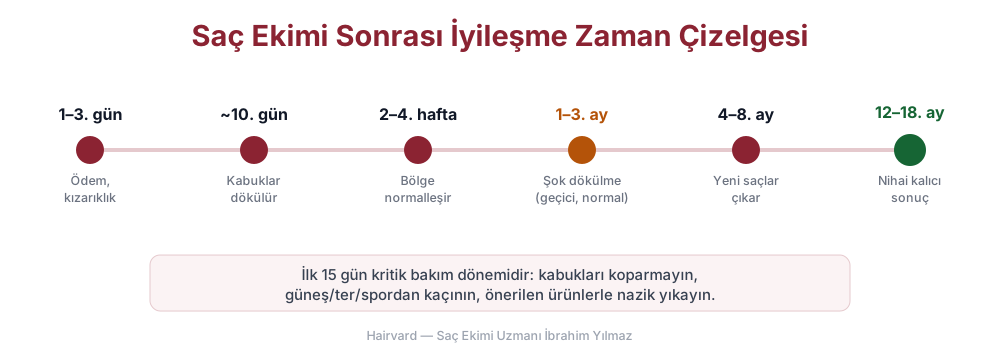
Hair transplant recovery is a gradual process that typically unfolds over 12 to 18 months, moving through predictable phases: initial healing and swelling in the first week, scab shedding by days 10 to 14, temporary "shock loss" around months 1 to 3, visible regrowth from months 4 to 8, and the final, mature result at 12 to 18 months. While the transplanted grafts are secure within about 10 to 14 days, patience is essential because the newly implanted hairs shed before they grow back stronger. This day-by-day guide explains exactly what to expect, how to wash and protect your scalp, what to avoid, and the warning signs that warrant contacting your clinic.
Key Takeaways
- Grafts become secure in roughly 10–14 days, after which the risk of dislodging them drops sharply, though gentle care continues for weeks.
- Shock loss is normal and temporary: most transplanted (and some existing) hairs shed between weeks 2 and 8 before permanent regrowth begins.
- The first wash usually happens on day 2 or 3, following your clinic's specific protocol to soften and remove crusts without rubbing.
- Swelling of the forehead peaks around days 3–4 and resolves on its own; sleeping semi-upright helps prevent and reduce it.
- Avoid sun, sweat, pools, saunas, intense exercise, smoking, and alcohol during the early weeks, as these impair healing and graft survival.
- The final result appears at 12–18 months; visible cosmetic improvement is typically obvious by months 6–9.
Understanding the Recovery Timeline
Hair transplant recovery has two overlapping tracks: wound healing (the scalp surface repairing itself, largely complete within 2 weeks) and hair cycle recovery (the transplanted follicles resting, shedding, and regrowing over many months). Understanding both prevents unnecessary worry when the initial "new hair" falls out.
The procedure itself, whether FUE or DHI, creates tiny channels in the recipient area and small extraction points in the donor area. These micro-wounds close quickly, but the follicles need a full growth cycle to produce mature, visible hair. If you are still deciding on a procedure, our overview of what a hair transplant is explains how grafts are harvested and placed.
Day-by-Day and Phase-by-Phase Timeline
The table below summarizes what typically happens at each stage. Individual healing varies, so treat these as general guidelines rather than fixed rules.
| Timeframe | What Typically Happens | Your Focus |
|---|---|---|
| Day 0 (procedure day) | Grafts placed; scalp tender, some oozing | Rest, sleep semi-upright, take prescribed meds |
| Days 1–3 | Redness, mild swelling begins, tiny scabs form | First wash (per clinic), manage swelling |
| Days 4–7 | Swelling peaks then fades, scabs harden | Continue gentle washing, avoid touching grafts |
| Days 8–14 | Scabs shed, redness fades, grafts secure | Finish crust removal, resume light routine |
| Weeks 2–4 | Recipient area calms; shock loss may start | Normal washing, protect from sun |
| Months 1–3 | Shock loss peaks; scalp looks thinner | Be patient, maintain scalp health |
| Months 4–8 | New hairs emerge, thicken gradually | Regular care, first haircut possible |
| Months 12–18 | Final density and texture mature | Enjoy result, routine maintenance |
Days 0–3: The First Critical Hours
The first 72 hours are the most delicate phase because the grafts are not yet anchored. Blood supply is being established, so protecting the recipient area is the top priority.
What to Expect
- Mild bleeding or oozing on day 0, which stops quickly.
- Tightness, numbness, or a "sunburned" sensation across the scalp.
- Small crusts forming around each graft.
- Swelling beginning around the forehead, sometimes reaching the eyes by day 3.
Sleep Position
Sleep on your back with your head elevated 45 degrees using two or three pillows or a travel neck pillow for the first 5–7 nights. This reduces swelling and prevents the grafts from rubbing against the pillow. Avoid sleeping face-down at all costs.
Managing Swelling
Forehead swelling (edema) is common and harmless. To minimize it, keep your head elevated, apply a cold compress to the forehead only (never directly on the grafts), and stay hydrated. Some clinics prescribe a short course of anti-inflammatory medication.
Days 4–10: Scabs and Washing
By day 4, swelling usually peaks and then subsides. Small scabs cover the transplanted area, and gentle, correct washing is now essential to remove them without disturbing grafts.
Step-by-Step Washing Method
- Soften first: Apply the lotion or moisturizing foam provided by your clinic to the recipient area and leave it on for 20–30 minutes to soften crusts.
- Rinse gently: Use lukewarm water and low pressure. Never aim a strong shower jet directly at the grafts.
- Lather without rubbing: Pour diluted medical shampoo into your palm, create foam, and dab it onto the scalp with fingertips. Do not scratch or scrub.
- Rinse and pat: Rinse with cupped handfuls of water. Pat dry with a paper towel or air-dry; never rub with a bath towel.
- Repeat daily: Wash once or twice daily as instructed until all crusts are gone, usually by days 10–14.
Do not force scabs off. They fall away naturally as you soften and rinse. Picking at them can dislodge a graft and cause scarring.
Weeks 2–4: Settling In
By the end of week 2, the grafts are secure and most crusts have cleared. The recipient area may still look pink, especially in fair skin, and this redness fades over several weeks. This is when many patients notice the first transplanted hairs beginning to shed, the start of shock loss.
You can typically resume gentle daily hair washing with normal shampoo around week 3–4, though continue to avoid vigorous scrubbing. Light activity is fine, but sweating and sun exposure should still be limited.
Months 1–3: Shock Loss
Around weeks 2 to 8, most of the transplanted hair shafts fall out. This alarms many patients, but it is a normal and expected part of the process. The follicle itself remains alive beneath the skin; it simply resets into a resting phase before producing a new, permanent hair.
Some patients also experience temporary thinning of their existing native hair near the transplant zone. This too usually recovers. For a full explanation of why this happens and how long it lasts, read our dedicated guide on shock loss after a hair transplant.
During this phase the scalp may look thinner than before surgery. Resist the urge to judge the outcome now; the visible result is still months away.
Months 4–8: Regrowth Begins
This is the rewarding phase. New hairs start pushing through, initially fine and sometimes lighter or curlier than expected. Over these months they thicken, darken, and gain length. By month 6, roughly half of the final density is usually visible; by month 8, most patients see a clear cosmetic improvement.
Growth is not uniform across the scalp, so patchy density during this window is normal and evens out over time.
Months 12–18: The Final Result
Full maturation takes 12 to 18 months. The last hairs to grow are often at the hairline and the crown, which can be slower. By this point the hair has reached its final caliber, density, and natural direction, and you can style, cut, and treat it exactly like the rest of your hair.
Do's and Don'ts During Recovery
| Do | Don't |
|---|---|
| Sleep with head elevated (first week) | Sleep face-down or on the grafts |
| Follow the exact washing protocol | Rub, scratch, or pick at scabs |
| Take prescribed medication | Skip antibiotics or painkillers early |
| Stay hydrated and eat well | Smoke or drink alcohol |
| Wear a loose hat outdoors after day 10 | Expose the scalp to direct sun |
| Rest and sleep adequately | Do intense exercise too soon |
| Contact your clinic with concerns | Ignore signs of infection |
What to Avoid and When
Many everyday activities interfere with healing and graft survival. The table below shows when it is typically safe to resume each one. Always confirm with your surgeon, as individual protocols differ.
| Activity | Why It Matters | Typically Resume |
|---|---|---|
| Direct sun exposure | UV damages healing skin and new grafts | Limited from week 4; full care for 3+ months |
| Heavy sweating | Moisture and salt can irritate grafts | After ~2–3 weeks |
| Swimming pools (chlorine) | Chemicals irritate the scalp | After ~4 weeks |
| Sea / salt water | Salt and sun exposure | After ~4 weeks |
| Sauna / steam room | Heat and sweat stress grafts | After ~4 weeks |
| Intense exercise / gym | Sweat plus raised blood pressure | Light at 2 weeks; full at 4 weeks |
| Smoking | Reduces blood flow to follicles | Avoid before and for 2+ weeks minimum |
| Alcohol | Thins blood, promotes swelling | Avoid for at least 1 week |
Smoking and Alcohol
Smoking constricts blood vessels and lowers oxygen delivery to the newly transplanted follicles, which can impair survival. Ideally stop for at least two weeks before and after surgery. Alcohol thins the blood and worsens swelling; avoid it for at least the first week.
Sun, Sweat, and Water
UV exposure on unhealed skin can cause pigmentation problems and stress fragile grafts, so keep the scalp shaded and out of strong sun for the first months. Sweat, chlorine, and salt water all irritate the recipient area; postpone pools, the sea, saunas, and heavy workouts as shown above.
Week-by-Week Return to Activities
| Activity | Week 1 | Week 2 | Week 3–4 | Month 2+ |
|---|---|---|---|---|
| Desk / office work | Often yes | Yes | Yes | Yes |
| Light walking | Yes | Yes | Yes | Yes |
| Gentle hair washing | Per protocol | Yes | Yes | Yes |
| Light gym (no sweat on scalp) | No | Caution | Yes | Yes |
| Intense exercise / sport | No | No | Caution | Yes |
| Swimming | No | No | No | Yes |
| Wearing a hat freely | Loose only | Loose only | Yes | Yes |
Returning to Work
Most people with desk jobs return to work within 2 to 5 days, especially if minor swelling or redness can be covered or is not a concern. Physically demanding jobs that involve sweating, heavy lifting, or dusty environments may require 1 to 2 weeks off.
Returning to Sport
Light walking is encouraged from day 1 to support circulation. Avoid running, weightlifting, and contact sports for about 4 weeks, resuming gradually. Anything that risks a blow to the head should wait longer.
Diet and Scalp Health
Good nutrition supports healing and follicle recovery. There is no magic food, but a balanced diet rich in protein, vitamins, and minerals gives your body what it needs.
- Protein (eggs, fish, lean meat, legumes) supplies the building blocks of hair.
- Iron and zinc (leafy greens, nuts, seeds) support follicle function.
- Vitamins A, C, D, and E aid tissue repair and reduce inflammation.
- Omega-3 fatty acids (fish, walnuts) help calm inflammation.
- Water: staying well hydrated supports overall healing.
Avoid crash diets during recovery, as sudden nutritional deficits can worsen shedding. Only take supplements your clinic recommends.
When Can You Cut or Dye Your Hair?
| Treatment | Earliest Timing | Notes |
|---|---|---|
| Trim donor area (scissors) | ~2–3 weeks | Scissors only, no clippers on recipient area |
| Cut recipient area (scissors) | ~1 month | Gently, avoid pulling grafts |
| Clippers / shaver on recipient | ~6 months | Wait until grafts are firmly rooted |
| Dyeing / coloring hair | ~6 months | Chemicals can irritate; patch test first |
The donor area can usually be trimmed with scissors after a couple of weeks. Avoid clippers or a razor over the transplanted zone for around six months, and postpone chemical dyes for about six months so the grafts are fully secure and the scalp fully healed.
Warning Signs: When to Contact Your Clinic
Complications are uncommon when aftercare is followed, but you should contact Hairvard promptly if you notice any of the following:
- Spreading redness, warmth, or increasing pain after the first few days (possible infection).
- Pus, foul odor, or yellow discharge from the recipient or donor area.
- Fever or feeling generally unwell.
- Heavy or persistent bleeding that does not stop with gentle pressure.
- Severe or worsening swelling beyond day 5, or swelling that spreads unusually.
- Grafts visibly dislodging or coming out during washing.
Early contact allows quick treatment and protects your result. Keep your clinic's number saved: +90 530 378 74 87.
Frequently Asked Questions
When do scabs fall off after a hair transplant?
Small crusts (scabs) usually form around the transplanted grafts within the first few days and typically begin to loosen and shed on their own between about day 7 and day 14, once gentle washing has started as instructed by your clinic. It is important not to pick or scratch them, since letting them fall away naturally helps protect the grafts during early healing. If crusting continues well beyond two weeks, or you notice unusual redness, warmth, or discharge, contact your clinic or physician for guidance.
How can I reduce swelling after a hair transplant?
Mild swelling of the forehead or around the eyes is a common, temporary part of early recovery and often appears in the first few days before easing over the following week. To help limit it, many clinics advise keeping your head slightly elevated when resting, applying a cold compress to the forehead as directed (never directly on the grafted area), and staying well hydrated. Any anti-inflammatory or other medication should only be used under physician supervision, and you should contact your clinic if the swelling is severe, spreads, or does not improve.
When can I sleep normally again after a hair transplant?
For roughly the first 5 to 7 nights, most clinics recommend sleeping on your back with your head elevated on a couple of pillows, which helps reduce swelling and avoids putting pressure on the newly transplanted grafts. Many people can gradually return to their usual sleeping position once the early healing phase has passed, generally after the first week or two, depending on how the grafts are settling. Individual recovery varies, so always follow the specific aftercare timeline your physician provides.
How long does a hair transplant take to fully heal?
The scalp surface heals within about two weeks, but full hair growth and the final result take 12 to 18 months. Most cosmetic improvement is visible by months 6 to 9.
When are the grafts safe and no longer at risk of falling out?
Grafts are generally secure after 10 to 14 days. After this point, normal washing and light daily activity are unlikely to dislodge them, though gentle handling remains wise.
Is shock loss normal after a hair transplant?
Yes. Shedding of transplanted (and sometimes surrounding) hair between weeks 2 and 8 is a normal, temporary phase. The follicles remain alive and regrow permanent hair within a few months.
When can I wash my hair normally?
Gentle, protocol-based washing usually starts on day 2 or 3. You can typically return to normal shampoo and everyday washing around weeks 3 to 4, avoiding vigorous scrubbing.
How do I sleep after a hair transplant?
Sleep on your back with your head elevated about 45 degrees for the first 5 to 7 nights. This reduces swelling and prevents the grafts from rubbing against the pillow.
When can I return to work?
Desk-based workers often return within 2 to 5 days. Physically demanding roles that involve sweating or heavy lifting may need 1 to 2 weeks.
When can I exercise or go to the gym again?
Light walking is fine from day 1. Avoid intense exercise, weightlifting, and heavy sweating for about 4 weeks, then resume gradually.
When can I go out in the sun?
Keep the scalp out of direct sun for the first weeks. Wear a loose hat outdoors from around day 10, and be sun-cautious for at least the first 3 months.
When can I swim again?
Wait about 4 weeks before swimming. Chlorine in pools and salt in the sea irritate the healing scalp, and pools often combine with sun exposure.
When can I cut or dye my hair?
The donor area can be trimmed with scissors after 2 to 3 weeks. Avoid clippers on the recipient area and chemical dyes for about six months.
Does smoking affect hair transplant recovery?
Yes. Smoking reduces blood flow and oxygen to the follicles, which can impair graft survival. Ideally stop for at least two weeks before and after surgery.
When will I see the final result?
The final density, texture, and hairline mature at 12 to 18 months. The hairline and crown are often the slowest areas to fill in completely.
What warning signs mean I should call the clinic?
Spreading redness, pus or foul odor, fever, heavy bleeding, or severe swelling after day 5 warrant prompt contact with your clinic, as they may indicate infection.
Is the recovery different for FUE and DHI?
The healing timeline is broadly similar for both techniques. Minor differences in scabbing and density can occur, but swelling, shock loss, and final maturation follow the same general schedule.
This article was medically reviewed by Ibrahim Yilmaz, Hair Transplant Specialist at Hairvard, a clinic licensed by the Turkish Ministry of Health in Atasehir, Istanbul. Information here is educational and not a substitute for personalized medical advice; healing varies by individual. For a free, no-obligation hair analysis and a recovery plan tailored to you, contact Hairvard at +90 530 378 74 87.