

Choosing when to schedule a hair transplant often feels like it should have a "correct" answer tied to weather or season, but the reality is more practical than biological. At Hairvard in Atasehir, Istanbul, patients ask us year-round whether summer heat, winter cold, or a specific month will affect how well their grafts take. This article walks through what actually matters when timing your procedure - and what doesn't.
Key Takeaways
- There is no reliable clinical evidence that graft survival rates change with the season - hair transplant outcomes depend on surgical technique, graft handling, and aftercare, not the calendar.
- Sun and UV exposure matter far more than the season itself; freshly transplanted grafts need protection from direct sunlight for several weeks regardless of when you have surgery.
- Many patients choose autumn, winter, or early spring simply because it is easier to avoid strong sun during the first few critical weeks of healing.
- Summer surgery is entirely possible and safe with a proper hat, shade, and sun avoidance routine - it is a logistics issue, not a medical restriction.
- Sweating and intense exercise are typically restricted for roughly 2 to 4 weeks after surgery, which some people find more comfortable to manage in cooler weather.
- Swimming pools and the sea are generally off-limits for several weeks post-op, so a summer beach holiday should be planned carefully around your surgery date, not during your recovery window.
- Visible healing stages - redness, scabbing, shedding, and regrowth - unfold over months, so many patients plan their surgery around personal or professional milestones rather than around weather.
- Off-peak travel seasons in Istanbul can mean better flight and hotel prices and a less busy clinic schedule, which is a genuine practical perk, not a medical one.
Does the Season Actually Affect Graft Survival?
This is the question most patients want answered first, and the honest answer is: not in any way that has been demonstrated through solid clinical evidence. Graft survival in a hair transplant is governed by factors that have nothing to do with the season on the calendar. What actually determines whether a graft survives and grows is:
- Extraction technique - how gently and precisely follicular units are removed from the donor area
- Time out of the body - how long grafts spend outside a nutrient solution before implantation
- Handling and storage - temperature control and solution quality during the procedure
- Implantation technique - the angle, depth, and density of placement
- Post-operative care - how well the patient follows aftercare instructions in the days and weeks after surgery
None of these factors are inherently better or worse in July versus January. A well-run clinic follows the same sterile protocols, the same graft-handling standards, and the same quality controls in every month of the year. If you hear a claim that "winter transplants take better" or "summer is the worst time for surgery," treat it skeptically - this is not something that has been established through rigorous research, and it is not a claim we would make to patients.
What genuinely changes from season to season is not biology, but the environment the patient returns to after surgery: how hot it is outside, how much they sweat, whether they are tempted to jump in a pool, and how strong the sun is. Those are practical, lifestyle-driven considerations, and they are worth planning around - but they are not medical reasons to delay or rush a transplant.
Sun and UV Exposure: The Biggest Seasonal Factor
If there is one genuinely season-linked issue, it is sun exposure. In the first few weeks after a hair transplant, both the recipient area (where grafts were placed) and the donor area (where hair was extracted) are healing skin. This skin is more vulnerable than usual, and direct, unprotected sun exposure during this window carries two real risks:
- Sunburn on healing skin - a sunburned scalp is uncomfortable at the best of times, but on a scalp with fresh incision points and grafts, it can also physically disturb healing tissue and, in some cases, contribute to graft damage.
- Pigmentation changes - healing skin can react to intense UV exposure with uneven pigmentation, which is more likely to be noticeable on a scalp that is already pink or scabbed from the procedure.
This is precisely why many patients gravitate toward autumn, winter, or early spring surgery dates - the ambient sun intensity is naturally lower, and there is less temptation to spend long hours outdoors bare-headed. Scheduling in these cooler months does not improve graft survival on a biological level, but it does make it easier to comply with the "avoid direct sun" instruction almost by default, simply because the weather encourages people to stay covered or indoors anyway.
That said, summer surgery is entirely realistic and safe. Patients who have their procedure in June, July, or August simply need to be more deliberate about sun avoidance:
- Wearing a loose, soft cotton hat (not a tight cap) once cleared to do so by the clinic
- Staying in the shade during peak UV hours, generally late morning through mid-afternoon
- Avoiding direct sun on the scalp entirely for the timeframe your clinical team specifies
- Using any scalp sun-protection product only if and when your medical team approves it under medical supervision
In short: sun avoidance is mandatory regardless of season, but it requires more conscious effort in summer and comes more naturally in cooler months.
Comparing Sun Exposure Management by Season
| Season | Ambient UV Intensity | Effort Needed to Avoid Sun | Typical Patient Experience |
|---|---|---|---|
| Summer (Jun-Aug) | High | High - requires hats, shade-seeking, discipline | Achievable, but demands consistent effort |
| Autumn (Sep-Nov) | Moderate | Low-moderate | Naturally easier to avoid strong sun |
| Winter (Dec-Feb) | Low | Low | Sun avoidance is nearly automatic |
| Spring (Mar-May) | Moderate, rising | Low-moderate | Manageable with basic precautions |
Sweating and Exercise Restrictions
After a hair transplant, patients are generally advised to avoid heavy sweating and intense physical exercise for roughly two to four weeks, with the exact timeframe depending on individual healing and the surgical technique used. This includes gym workouts, running, contact sports, and any activity that raises body temperature and heart rate significantly.
The reasoning is straightforward: sweat can irritate the healing scalp, increase the risk of infection at graft sites, and in some cases prompt patients to touch or rub the treated area, which is exactly what should be avoided in the early healing window.
Seasonal weather plays a role here too, though again a practical rather than medical one. In hot summer months, everyday activities - walking outside, commuting, even sitting in a non-air-conditioned room - can induce more sweating than the same activities would in a cool autumn or winter climate. Patients recovering in summer sometimes find it takes a bit more planning to stay in air-conditioned spaces and minimize incidental sweating, whereas cooler months make this restriction easier to observe without much extra thought.
This does not mean summer patients face higher risk - it means they may need to be more mindful of air conditioning, activity scheduling, and clothing choices during the restricted period.
Swimming, Pools, and the Sea
This is one of the most concrete, practical reasons that timing does matter for many patients - especially those planning a summer vacation. Pools, the sea, lakes, and hot tubs are typically off-limits for several weeks after a hair transplant. There are two separate concerns:
- Infection risk - Any body of water shared with other people, or treated with chemicals, introduces bacteria or irritants to the healing scalp before it has fully closed.
- Chemical and salt exposure - Chlorine and salt water can dry out or irritate the scalp and interfere with proper healing of both the recipient and donor sites.
If you already have a beach holiday, a pool-centered resort trip, or a diving vacation booked, this is the single most important scheduling factor to get right - far more important than which season it technically is. The practical guidance is simple: plan your surgery date clearly before or clearly after your water-based vacation, leaving enough buffer that the restricted period does not overlap with the trip at all. Scheduling surgery two weeks before a beach holiday, for example, does not work, because the restricted swimming window will still be in effect during the trip.
Planning Surgery Around a Water Vacation
| Scenario | Recommended Approach |
|---|---|
| Beach/pool holiday already booked in 2-3 weeks | Postpone surgery until after the trip |
| Beach/pool holiday booked 3+ months out | Surgery now is generally fine; healing window will be well over before the trip |
| No specific water-based trip planned | Season becomes far less relevant to timing |
| Recurring summer swimming routine (e.g., own pool) | Consider autumn/winter surgery so restricted weeks fall outside peak swim season |
Visible Healing Stages and Planning Around Events
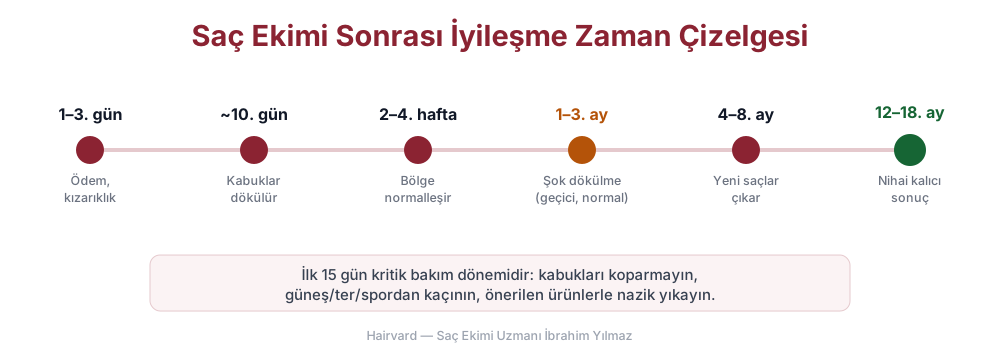
Beyond sun and water, many patients think about timing in terms of how their scalp will look at different points in the healing process - particularly if they have a wedding, an important work event, a reunion, or a photographed occasion coming up. Understanding the general healing timeline helps with this kind of planning, regardless of season:
- Weeks 1-2: Redness, mild swelling, and scabbing around the transplanted grafts are typical and visible.
- Weeks 2-6: Many transplanted hairs shed in what is called "shock loss" - a normal, expected part of the process, not a sign of failure. The scalp often looks similar to how it did before surgery during this stretch.
- Around months 3-4: Thin, early regrowth typically begins to appear, though it is usually fine and not yet full in coverage.
- Months 6-12 and beyond: Regrowth continues to thicken and mature over this longer arc, with most patients seeing substantially fuller results as this period progresses.
For a full breakdown of what to expect at each stage, see our detailed hair transplant recovery timeline.
Because the most visually obvious phase (redness and scabbing) resolves within the first couple of weeks, most patients simply avoid scheduling surgery in the immediate 10-14 days before a major event. This has nothing to do with season and everything to do with the personal calendar. A patient marrying in June might choose to have surgery the previous autumn or winter specifically to allow several months of regrowth before the wedding - not because autumn is medically superior, but because it creates the right amount of lead time.
Healing Stage Overview
| Timeframe | What's Typically Visible | Planning Implication |
|---|---|---|
| Days 1-14 | Redness, scabbing, mild swelling | Avoid scheduling right before public/photographed events |
| Weeks 2-6 | Shedding of transplanted hairs (shock loss) | Scalp may look similar to pre-surgery state |
| Months 3-4 | Early, thin regrowth begins | Not yet full coverage - manage expectations for events in this window |
| Months 6-12+ | Progressive thickening and maturation | Best window for major appearance-dependent milestones |
Travel and Logistics: The Real Seasonal Advantage
For patients traveling to Istanbul from abroad, which describes a large share of Hairvard's patients, the most legitimate "seasonal" consideration is logistical rather than medical: travel costs and clinic availability.
Istanbul, like most major travel destinations, has clear peak and off-peak travel periods. Summer (particularly July and August) tends to be the busiest tourist season, which can mean:
- Higher flight prices from many European, Middle Eastern, and other international routes
- Higher hotel rates, especially in central and popular districts
- Busier clinic calendars generally, simply because more patients choose to combine their procedure with a summer trip
Conversely, autumn, winter, and early spring are typically quieter travel periods in Istanbul, which can translate into:
- More competitive flight and accommodation pricing
- More flexible scheduling for consultations and the procedure date itself
- A generally calmer travel experience with fewer crowds at the airport and in the city
None of this affects the medical outcome of your transplant. It is purely a practical convenience - and for patients balancing cost and flexibility on top of the procedure itself, it can be a meaningful factor in deciding when to travel.
Seasonal Travel Considerations for Istanbul
| Season | Typical Travel Demand | Flight/Hotel Pricing | Clinic Scheduling Flexibility |
|---|---|---|---|
| Summer (Jun-Aug) | High (peak tourist season) | Often higher | Can be busier |
| Autumn (Sep-Nov) | Moderate-low | Often more competitive | Generally more flexible |
| Winter (Dec-Feb) | Low | Often most competitive | Generally most flexible |
| Spring (Mar-May) | Moderate | Variable, often reasonable | Generally flexible |
Preparing for Your Procedure, Regardless of Season
Whatever time of year you choose, the preparation steps that matter for a good outcome remain the same. These include things like avoiding certain medications and supplements before surgery, refraining from alcohol for a specified period, arranging transportation, and following any pre-operative instructions provided under medical supervision by your clinical team. Our detailed hair transplant preparation guide covers this step by step, and it applies identically whether your surgery date falls in January or August.
So, Is There a "Best" Season After All?
Bringing it all together, here is an honest summary of how the seasons actually compare when it comes to a hair transplant:
Season-by-Season Honest Comparison
| Factor | Summer | Autumn | Winter | Spring |
|---|---|---|---|---|
| Graft survival (biological) | No difference | No difference | No difference | No difference |
| Sun avoidance effort | Higher effort required | Lower effort | Lowest effort | Lower-moderate effort |
| Sweating/exercise restriction comfort | Requires more discipline (AC, shade) | More naturally comfortable | Most naturally comfortable | Comfortable |
| Swimming/beach conflict risk | Highest (peak swim season) | Low | Low | Low-moderate |
| Travel cost and clinic availability | Often pricier, busier | Often better value | Often best value | Generally good |
| Event planning (weddings, etc.) | Depends entirely on personal calendar | Depends entirely on personal calendar | Depends entirely on personal calendar | Depends entirely on personal calendar |
The pattern that emerges is clear: season does not change the medical outcome of a hair transplant, but it does change how easy or difficult it is to comply with certain aftercare instructions, and it can affect travel convenience and cost. For patients who want the path of least resistance - naturally lower sun exposure, more comfortable adherence to activity restrictions, and potentially better travel value - autumn, winter, and early spring tend to be the more popular choices. For patients whose schedule, work commitments, or personal life only allow for a summer procedure, that is a perfectly legitimate choice too, provided they commit to consistent sun protection and are realistic about the swimming restriction if a summer vacation is also on the calendar.
At Hairvard, procedures are performed year-round under the same clinical standards and by the same experienced team regardless of month, with pricing generally in the range of EUR 2,200 to 4,800 depending on the technique used, the extent of the procedure, and individual patient needs. The "best" time for your transplant is ultimately the time that fits your lifestyle, your travel plans, and your tolerance for sun discipline - not a specific month dictated by biology.
Frequently Asked Questions
Does hair transplant surgery work better in winter than in summer?
No. There is no solid clinical evidence that graft survival or overall results differ based on the season. Outcomes depend on surgical technique, graft handling, and how well aftercare instructions are followed - not on the time of year.
Why do so many patients choose autumn or winter for their transplant?
Mainly for convenience. Cooler months make it naturally easier to avoid direct sun exposure and reduce sweating during the critical early healing weeks, and travel to Istanbul can be less expensive and less crowded during these periods.
Can I get a hair transplant in the middle of summer?
Yes. Summer surgery is entirely possible and safe. It simply requires more deliberate sun avoidance - wearing a proper hat, staying in shade during peak sun hours, and being diligent about the restrictions your clinical team outlines.
How long do I need to avoid direct sunlight after a hair transplant?
Your clinical team will give you a specific timeframe based on your healing progress, but avoiding direct sun on the scalp for several weeks after surgery is standard practice across seasons, since freshly transplanted grafts and the healing donor area are more vulnerable to sunburn and pigmentation changes during this period.
Will sunburn actually damage my grafts?
Sunburn on a healing scalp can irritate and potentially disturb healing tissue, and it can also increase the risk of uneven pigmentation on skin that is still recovering. This is why sun protection is emphasized regardless of when you have surgery.
How long after surgery can I go swimming?
Pools, the sea, and similar bodies of water are typically off-limits for several weeks after the procedure due to infection risk and exposure to chlorine or salt water. Your clinical team will confirm the exact timeframe based on your healing.
I have a beach holiday booked - should I get my transplant before or after?
This depends on timing. If your trip is only a few weeks away, it is generally better to postpone surgery until after the holiday, since the swimming restriction will likely still apply during your trip. If your trip is several months out, having surgery beforehand is usually fine, as the restricted period will be well behind you by the time you travel.
When can I exercise normally again after a hair transplant?
Heavy sweating and intense exercise are generally restricted for roughly two to four weeks after surgery, though the exact duration depends on your individual healing and the technique used. Light activity is usually reintroduced gradually under your clinical team's guidance.
This article has been medically reviewed by Ibrahim Yilmaz, hair transplant specialist at Hairvard. If you're weighing when to schedule your procedure, we invite you to book a free, no-obligation consultation with our team to discuss your individual circumstances, timeline, and goals.