

Finasteride is one of the most widely prescribed treatments for male pattern hair loss, and for good reason: it targets the hormonal process that drives the condition at its source rather than simply masking the symptoms. If you have been researching ways to slow or stop your hair loss, you have almost certainly come across the name, often mentioned alongside minoxidil or discussed in the context of preparing for a hair transplant. But finasteride is a genuine medication with real effects on your body, and it deserves a careful, honest explanation rather than either uncritical enthusiasm or fear-driven dismissal. This guide explains exactly what finasteride is, how it works, who it suits, how it should be used, and what its side effects actually are, so that you can have a properly informed conversation with a qualified doctor.
At Hairvard, we believe patients make better decisions when they understand the science. Finasteride is a prescription-only medicine, and nothing in this article is a substitute for a consultation with a licensed physician. What follows is designed to give you the clearest possible picture before you take that step.
Key Takeaways
- Finasteride is a prescription medication that treats male pattern hair loss by blocking the enzyme 5-alpha reductase, which lowers levels of the hormone DHT that shrinks hair follicles.
- It is most effective at slowing loss and helping regrow miniaturised hair on the crown and mid-scalp, and it works best when started early, before follicles are lost entirely.
- The effect is dependent on continued use. If you stop taking finasteride, DHT levels return to normal and any hair preserved by the drug is typically lost within 6 to 12 months.
- Side effects are uncommon but real. Most men tolerate finasteride well, but a minority experience sexual side effects, and honest discussion of these with your doctor is essential.
- Finasteride is generally not prescribed to women of childbearing potential because of a serious risk to a developing male fetus; caution and specialist guidance are required.
- Used under medical supervision, finasteride can protect your existing and transplanted hair, making it a common part of a long-term hair transplant strategy.
What Is Finasteride?
Finasteride is a synthetic medication originally developed to treat an enlarged prostate (a condition called benign prostatic hyperplasia). During those studies, researchers noticed an unexpected but welcome effect: men taking the drug were regrowing hair. This led to its approval, at a lower dose, specifically for treating male pattern baldness, known medically as androgenetic alopecia.
The two doses reflect the two uses. For prostate treatment, finasteride is prescribed at 5 mg per day. For hair loss, the standard dose is just 1 mg per day, a fraction of the prostate dose. This is an important distinction, because much of the fear around finasteride comes from data mixing the two very different dosages.
Finasteride belongs to a class of drugs called 5-alpha reductase inhibitors. To understand what that means and why it matters for your hair, we need to look briefly at the hormone at the centre of male pattern hair loss.
How Does Finasteride Work?
Male pattern hair loss is driven largely by a hormone called dihydrotestosterone, or DHT. DHT is a potent derivative of testosterone. In genetically susceptible men, DHT binds to receptors in the hair follicles of the scalp and gradually causes them to shrink, a process called miniaturisation. Over successive growth cycles, the follicle produces thinner, shorter, weaker hairs until, eventually, it stops producing visible hair altogether. To understand this process fully, it helps to read our detailed explanation of what DHT is and how it affects hair.
Here is the key: DHT is not made directly. Your body converts testosterone into DHT using an enzyme called 5-alpha reductase. Finasteride works by blocking this enzyme. With the enzyme inhibited, far less testosterone is converted, and DHT levels in the scalp and blood fall significantly.
At the standard 1 mg daily dose, finasteride reduces scalp DHT by around 60 percent and serum DHT by a similar margin. With less DHT circulating, the follicles are no longer under constant hormonal attack. Miniaturised follicles can recover, growth cycles lengthen, and hairs grow back thicker. This is why finasteride is described as treating the cause of male pattern hair loss rather than the symptom.
It is worth being clear about what this does and does not mean. Finasteride does not add hair that was never there, and it cannot revive follicles that have been dead for years. What it does is halt the ongoing hormonal damage and give struggling follicles a chance to recover.
Who Is Finasteride Suitable For?
Finasteride is designed for adult men with male pattern hair loss. It tends to work best for men who:
- Are in the early to moderate stages of hair loss, where follicles are miniaturised but not yet completely gone.
- Are losing hair primarily on the crown and mid-scalp, where the evidence for finasteride is strongest.
- Are prepared to take a daily medication consistently over the long term.
- Have discussed their medical history with a doctor and have no contraindications.
Finasteride is generally less effective at the frontal hairline and temples, areas where hair loss is often less responsive to medication and where a hair transplant may be the more realistic solution.
The following table summarises how suitability tends to vary:
| Patient profile | Typical suitability for finasteride |
|---|---|
| Man in early-stage crown thinning | Strong candidate; often excellent results |
| Man with moderate diffuse thinning | Good candidate; helps slow and partially reverse loss |
| Man with a fully bald, shiny crown | Limited benefit; follicles likely lost |
| Man wanting to protect a hair transplant | Commonly recommended alongside surgery |
| Woman of childbearing potential | Not suitable; serious pregnancy risk |
| Postmenopausal woman | Only under specialist supervision; limited evidence |
The single most important point is that suitability is a medical decision. A qualified doctor will assess your pattern of loss, your age, your general health, and your expectations before deciding whether finasteride is appropriate for you.
How to Use Finasteride Safely
Finasteride is a prescription-only medication, and it must be used under medical supervision. It should never be bought from unregulated online sources or taken without a doctor's assessment. Here are the practical points that matter.
Dosage. For hair loss, the standard dose is 1 mg taken once daily. Taking more than this does not produce meaningfully better results and increases the risk of side effects. It can be taken with or without food, at any time of day, though taking it at the same time each day helps consistency.
Timeframe. Finasteride does not work overnight. Because hair grows in cycles, it typically takes 3 to 6 months to see the loss slow, and often 9 to 12 months to see the fullest benefit. Patience is essential. Some men also notice a temporary increase in shedding in the first few weeks, which is usually a sign that follicles are entering a new, healthier growth cycle.
Consistency. The benefit lasts only as long as you keep taking the medication. This is one of the most important things to understand about finasteride, and we discuss it in detail below.
Monitoring. Because finasteride lowers a marker called PSA (used in prostate cancer screening), you should tell any doctor performing that test that you take finasteride. Regular check-ins with your prescribing doctor allow side effects to be caught and discussed early.
| Timeframe on finasteride | What to typically expect |
|---|---|
| First 2–8 weeks | Possible temporary increase in shedding |
| 3–6 months | Hair loss slows; shedding stabilises |
| 6–9 months | Early regrowth and thickening may be visible |
| 9–12 months | Fullest visible benefit for most responders |
| Beyond 12 months | Maintenance of gains with continued daily use |
What Happens If You Stop Taking Finasteride?
This is one of the most common and important questions patients ask, and the honest answer is straightforward: the benefits of finasteride are not permanent.
Finasteride works by keeping DHT suppressed. The moment you stop taking it, the enzyme 5-alpha reductase resumes normal activity, DHT levels climb back to their previous levels, and the hormonal pressure on your follicles returns. Any hair that finasteride was actively protecting or regrowing will, over the following 6 to 12 months, gradually be lost again, and your hair loss will typically resume from where it would have been had you never started.
This does not mean finasteride is a trap. It means finasteride is a treatment for an ongoing condition, in the same way that medication for blood pressure controls the condition only while you take it. Understanding this upfront is essential to making a realistic, long-term decision. If you are weighing up your options, our guide on how to stop hair loss explains how finasteride fits into the wider picture alongside other approaches.
Finasteride Side Effects: An Honest Look
No responsible article about finasteride would gloss over its side effects, and no responsible doctor would prescribe it without discussing them. The reality is that most men take finasteride without any side effects at all, but a minority do experience them, and you deserve honest, balanced information.
The most discussed side effects are sexual in nature: reduced libido, difficulty achieving or maintaining an erection, and a reduction in the volume of ejaculate. In the large clinical trials that led to finasteride's approval, these effects occurred in a small percentage of men, typically in the low single digits, and were only modestly more common than in the placebo group. In most cases, these effects resolved when the medication was stopped, and in some men they resolved even while continuing treatment.
A smaller number of men report mood changes, including low mood or depressive symptoms. There has also been discussion of a condition some refer to as post-finasteride syndrome, in which side effects are reported to persist after stopping the drug. This is an area of ongoing research and genuine scientific debate; it is not fully understood, and it is not something to dismiss. The responsible approach is to be aware of it, to report any persistent symptoms to your doctor, and to make your decision with full knowledge.
The table below gives a balanced view of the benefits set against the potential side effects.
| Effects (benefits) | Potential side effects |
|---|---|
| Reduces scalp DHT by around 60% | Reduced libido (uncommon) |
| Slows or halts hair loss | Erectile difficulty (uncommon) |
| Regrows miniaturised hair on crown/mid-scalp | Reduced ejaculate volume (uncommon) |
| Protects existing and transplanted hair | Mood changes, including low mood (less common) |
| Treats the hormonal cause, not just symptoms | Rarely, breast tenderness or swelling |
| Simple once-daily oral dose | Persistent symptoms in a small minority (debated) |
If you experience any side effect that concerns you, the correct step is always to speak to your prescribing doctor rather than stopping abruptly or continuing in discomfort. Side effects should be weighed honestly against the benefits, and that balance is personal to each patient.
Why Finasteride Requires Caution in Women
Finasteride is not a standard treatment for female hair loss, and there is a critical safety reason for this. Because finasteride interferes with the conversion of testosterone to DHT, a hormone essential for the normal development of male genitalia, it poses a serious risk to a developing male fetus. A woman who is pregnant, or who could become pregnant, must not take finasteride.
The risk is significant enough that women who are or may become pregnant are advised not even to handle crushed or broken finasteride tablets, as the drug can theoretically be absorbed through the skin. Intact tablets are coated to prevent this during normal handling.
In some carefully selected cases, such as certain postmenopausal women, a specialist may consider finasteride, but the evidence for its effectiveness in women is limited and the decision must always be made by a doctor experienced in treating female hair loss. For women, other treatments are usually more appropriate first-line options, and any use of finasteride is strictly a specialist decision.
Finasteride vs Minoxidil: How Do They Compare?
Finasteride and minoxidil are the two most established medical treatments for hair loss, and they are often confused or assumed to be interchangeable. In fact, they work in completely different ways and are frequently used together for a stronger combined effect. Minoxidil is a topical (and sometimes oral) treatment that improves blood flow to the follicles and prolongs the growth phase, whereas finasteride tackles the hormonal cause. You can read more in our dedicated guide to what minoxidil is and how it works.
| Feature | Finasteride | Minoxidil |
|---|---|---|
| How it works | Blocks DHT via 5-alpha reductase | Improves follicle blood flow, extends growth phase |
| Form | Oral tablet | Topical foam/solution (sometimes oral) |
| Targets the cause? | Yes, hormonal cause | No, stimulates existing follicles |
| Prescription needed? | Yes | Topical often over the counter |
| Best scalp area | Crown and mid-scalp | Crown, also helps elsewhere |
| Suitable for women? | Generally no | Yes, specific formulations |
| Effect if stopped | Hair loss resumes | Hair loss resumes |
The most important shared feature is at the bottom of that table: both treatments only work while you use them. Neither is a permanent cure. Many doctors recommend using them together, because attacking hair loss on two fronts, hormonal and follicular, tends to produce better results than either alone.
Using Finasteride Alongside a Hair Transplant
A hair transplant and finasteride are not competing choices; they solve different problems and work best as a team. A hair transplant relocates healthy, DHT-resistant follicles from the back and sides of your scalp to areas of loss. Those transplanted follicles are permanent. However, a transplant does not stop the ongoing miniaturisation of your native, non-transplanted hair.
This is where finasteride becomes valuable. Without treatment, a man can undergo a successful transplant only to watch the untreated hair around the grafts continue to thin over the following years, creating a patchy, unnatural result and potentially requiring further surgery. By keeping DHT suppressed, finasteride helps protect the native hair you still have, preserving the overall density and the natural look of the result.
For this reason, many surgeons recommend that suitable candidates take finasteride before and after a transplant, always under medical supervision. It is one of the reasons a good clinic treats hair loss as a long-term plan rather than a single procedure.
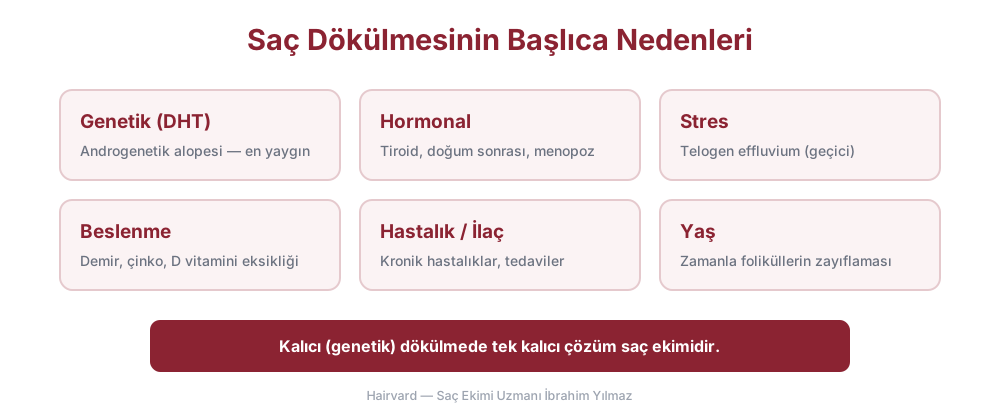
The decision to combine finasteride with surgery, like every decision involving this medication, should be made together with your surgeon and based on your individual pattern of loss, your age, and your goals.
Frequently Asked Questions
How long does finasteride take to work?
Finasteride works gradually because hair grows in cycles. Most men begin to notice that their hair loss has slowed within 3 to 6 months, with the fullest visible benefit usually appearing around 9 to 12 months. Some men experience a temporary increase in shedding in the first few weeks; this is generally a normal sign of follicles resetting into a healthier growth phase and is not a reason to stop.
Is finasteride safe to take long term?
For most men, finasteride has been used safely for many years, and long-term data is reassuring. That said, "safe" is an individual assessment. Long-term use should always be monitored by your prescribing doctor, who can review any side effects and confirm the medication remains appropriate for you over time.
Will I lose my hair if I stop taking finasteride?
Yes, this is the honest answer. Finasteride controls hair loss only while you take it. If you stop, DHT levels return to normal and the hair the drug was protecting is typically lost over the following 6 to 12 months, returning you to the trajectory you would have been on without treatment.
Can finasteride regrow hair I have already lost?
Finasteride can regrow hair from follicles that have been miniaturised but are still alive, which is why it works best when started early. It cannot regrow hair from follicles that have already died and disappeared, as those are gone permanently and can only be addressed with a hair transplant.
Are finasteride side effects permanent?
For the large majority of men who experience side effects, they resolve either while continuing the medication or after stopping it. A small minority report persistent symptoms, an area still under scientific investigation. If you experience any side effect that persists or concerns you, speak to your doctor promptly.
Can I take finasteride and minoxidil together?
Yes, and many doctors recommend exactly this. Because finasteride addresses the hormonal cause of hair loss and minoxidil stimulates the follicles directly, the two work through different mechanisms and complement each other. Using them together often produces better results than either treatment alone.
Do I need a prescription for finasteride?
Yes. Finasteride is a prescription-only medication in most countries and must be taken under medical supervision. This is not a bureaucratic hurdle; a doctor's assessment ensures the drug is appropriate for you, that you understand the side effects, and that any problems can be monitored.
Can women take finasteride for hair loss?
Generally, no. Finasteride poses a serious risk to a developing male fetus, so it must not be used by women who are pregnant or who could become pregnant, and they should not even handle broken tablets. In limited cases a specialist may consider it for certain postmenopausal women, but this is always a specialist decision.
This article has been reviewed and confirmed for medical accuracy by Ibrahim Yilmaz, hair transplant specialist at Hairvard, Atasehir, Istanbul. It is intended for educational purposes and does not replace a personal medical consultation. For a free, no-obligation hair analysis and honest advice on whether finasteride, a hair transplant, or a combination is right for you, contact the Hairvard team today. Our specialists will help you understand your options with no pressure and complete transparency.