

AI hairline design is one of the most decisive factors in whether a hair transplant looks natural or obviously "done." At Hairvard, our Hairvard Studio AI proposes a hairline tailored to your facial proportions, age, and hair characteristics, giving you a clear starting point for discussion. This is a planning and visualization aid: the AI supports our specialist, and your final hairline is always reviewed and confirmed by specialist Ibrahim Yilmaz before any procedure. This guide explains how AI hairline design works, what makes a hairline look natural, why artificial "too straight" lines are avoided, and how the AI and specialist collaborate to reach a design you feel confident about.
Key Takeaways
- Hairvard Studio AI proposes a hairline based on your facial proportions, age, and photo-based analysis, then presents an estimated preview so you can visualize the direction of your plan.
- A natural hairline is irregular, not a straight line. Soft transitions, subtle asymmetry, and single-hair "sentinel" follicles at the very front are what make it look believable.
- The AI supports, it does not replace, the specialist. Your final hairline design and full medical plan are always confirmed by specialist Ibrahim Yilmaz.
- Age matters. A hairline that looks right at 25 can look unnatural at 50, so the design accounts for how your face and hair may change over time.
- The simulated preview is an estimate, not a guarantee. Real results vary by individual and depend on donor capacity, healing, and biology.
- Free photo-based analysis is available, and the AI's four capabilities (analysis, simulation, hairline design, technique recommendation) work together to build a personalized plan.
Why the Hairline Is the Most Important Line on Your Face
The hairline frames your entire face. Unlike the crown or mid-scalp, which are harder to see, the hairline sits front and center and is the first thing people notice. A well-designed hairline can look completely undetectable; a poorly designed one draws attention for all the wrong reasons.
The most common giveaway of an older or rushed transplant is a hairline that is too low, too straight, or too dense at the very front. Nature does not draw straight lines. A real hairline has a soft, slightly irregular edge with fine single hairs leading the way, gradually increasing in density behind them.
This is exactly the kind of nuance that AI hairline design is built to respect. Rather than dropping a uniform line across the forehead, Hairvard Studio AI models the hairline as a zone with graduated density and natural irregularity. To understand how this fits into the wider platform, see what is Hairvard Studio AI.
What Makes a Hairline Look Natural
A natural-looking hairline is not about a single measurement; it is the combination of several criteria working together. The table below summarizes the core elements our AI models and our specialist confirms.
| Criterion | What it means | Why it matters |
|---|---|---|
| Irregularity | A soft, slightly uneven edge rather than a ruler-straight line | Straight lines read as artificial; nature is irregular |
| Single-hair front | Fine single-follicle grafts placed at the very front edge | Creates a feathered, undetectable transition |
| Graduated density | Density increases gradually from front to back | Mimics how natural hair thickens behind the leading edge |
| Facial proportion | Hairline height set relative to forehead and facial thirds | Keeps the frame balanced with your features |
| Age appropriateness | Position and shape suited to your current and future age | Prevents a line that looks unnatural as you age |
| Direction of growth | Hairs angled forward and slightly to the sides at the front | Matches natural growth patterns and styling |
| Temporal framing | How the hairline meets the temples | Avoids an isolated, "pluggy" or disconnected look |
These criteria are why a hairline cannot simply be copied from a photo of someone else. Your design has to suit your face. The AI uses your facial proportions to propose a starting point, and the specialist refines it with clinical judgment.
For a broader understanding of the procedure these hairlines are built on, see what is a hair transplant.
How Hairvard Studio AI Proposes a Hairline
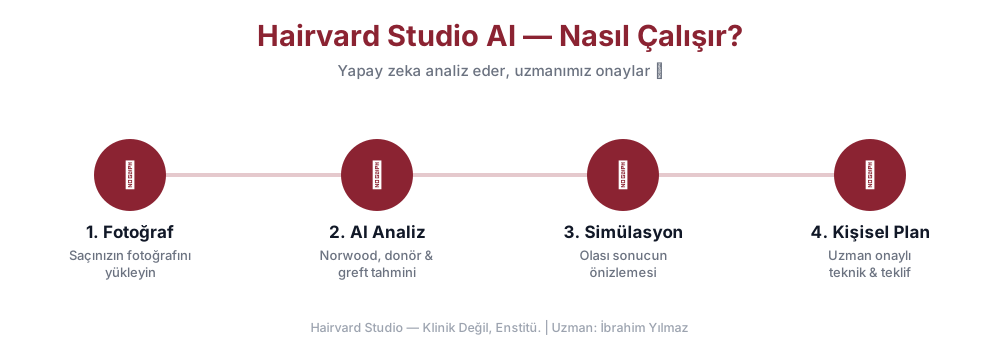
Hairline design is one of the four capabilities of Hairvard Studio AI, working alongside photo-based analysis, result simulation, and technique recommendation. Here is how the hairline step works in practice.
1. Photo-based facial mapping. From the photos you upload, the AI identifies key facial landmarks and proportions. It considers the height of your forehead, the balance of your facial thirds, and your existing hair pattern (including approximate Norwood stage from the analysis step).
2. Age-aware positioning. The AI factors in your age so the proposed hairline is not set unrealistically low. A conservative, age-appropriate position tends to look natural for far longer and protects your donor supply for the future.
3. Natural-edge modelling. Instead of a straight line, the AI proposes an irregular edge with a single-hair leading zone and graduated density behind it, following the natural-hairline criteria above.
4. Estimated visual preview. The proposed hairline is shown as a simulated preview so you can see the direction of the design. This preview is an estimated visualization, not a guaranteed result. Real outcomes vary by individual and are influenced by your donor capacity, biology, and healing.
5. Specialist confirmation. The AI's proposal is a starting point for discussion, not a final plan. Specialist Ibrahim Yilmaz reviews the design, adjusts it using clinical judgment, and confirms the final hairline with you.
Why "Too Straight" or Artificial Lines Are Avoided
One of the clearest signals of an unnatural transplant is a hairline that looks like it was drawn with a ruler. There are several reasons Hairvard Studio AI and our specialist deliberately avoid this.
- Nature is irregular. No one is born with a perfectly straight hairline. A straight edge instantly reads as artificial, even to people who cannot say exactly why.
- A single-hair front softens the edge. Placing fine, single-follicle grafts at the very front and increasing density behind them creates a feathered transition instead of a hard wall of hair.
- Micro-irregularity mimics real growth. Subtle bumps and slight asymmetry along the hairline follow how hair actually grows, making the design far harder to detect.
- A low, dense line ages badly. What looks full at 25 can look strange as the face matures and surrounding hair thins. An age-appropriate design stays believable over time.
By modelling the hairline as a graduated zone rather than a line, the AI gives the specialist a natural foundation to refine, rather than something that has to be corrected from scratch.
AI and Specialist: Who Does What
The most important honesty point in AI hairline design is understanding the division of roles. The AI supports the specialist; it does not replace them. The table below makes the boundary clear.
| Task | AI role | Specialist role (Ibrahim Yilmaz) |
|---|---|---|
| Facial mapping | Detects landmarks and proportions from photos | Verifies mapping against in-person or clinical assessment |
| Hairline proposal | Suggests an age- and proportion-appropriate starting shape | Refines shape with clinical experience and patient preference |
| Density planning | Estimates a graduated density pattern | Confirms realistic density based on donor capacity |
| Preview | Generates an estimated visualization | Explains what is realistic vs. aspirational |
| Final design | Provides a data-informed draft | Confirms and signs off the final hairline |
| Medical decision | Not a medical authority | Makes and confirms all medical decisions |
In short, the AI accelerates and informs the conversation. It gives you and the specialist a shared visual reference so the discussion starts from a concrete proposal rather than a blank page. But every clinical judgment, and the final hairline, belongs to specialist Ibrahim Yilmaz.
How the Hairline Connects to Your Technique and Plan
Your hairline design does not exist in isolation. It is linked to the technique used to place the grafts and to your overall plan. Single-hair grafts at the front, precise angling, and controlled density all depend on the placement method. Understanding the difference between methods helps here: see FUE vs DHI hair transplant to learn how graft placement can affect hairline detail.
Once the hairline is agreed, Hairvard Studio AI's fourth capability, personalized technique recommendation, ties everything together into a suggested plan and quote. Our transparent price range is EUR 2,200 to 4,800, depending on the number of grafts and the technique. This range is always confirmed with you before anything proceeds.
| Plan element | How the hairline influences it |
|---|---|
| Graft estimate | A larger or lower hairline zone needs more grafts |
| Technique choice | Fine front detail may favor a particular placement method |
| Donor usage | An age-appropriate hairline protects donor supply for the future |
| Quote (EUR 2,200–4,800) | Total grafts and technique determine the final estimate |
Setting Realistic Expectations
It is worth repeating clearly: the AI-generated hairline preview is an estimated visualization, not a promise. Several factors mean real results differ from person to person:
- Donor capacity limits how much density can realistically be created.
- Individual biology and healing affect how grafts grow.
- Future hair loss may continue in untreated areas, which is why age-appropriate planning matters.
Hairvard does not use before/after patient photos or guaranteed-result claims, in line with Turkish regulations. What we offer instead is a transparent, specialist-confirmed plan and an honest conversation about what is achievable for you.
Frequently Asked Questions
Does the AI decide my final hairline?
No. The AI proposes a hairline based on your facial proportions, age, and photos, but the final design is always reviewed and confirmed by specialist Ibrahim Yilmaz. The AI supports the specialist; it does not replace clinical judgment.
Why not just make my hairline as low as possible?
A very low hairline can look unnatural, uses more grafts, and depletes your donor supply. It can also age poorly. The AI proposes an age-appropriate position, and the specialist confirms a height that looks natural now and in the years ahead.
Why is a straight hairline avoided?
Natural hairlines are irregular, not straight. A ruler-straight edge is one of the clearest signs of an artificial transplant. The AI models a soft, irregular edge with single hairs at the front, which the specialist refines for a believable result.
Is the AI preview a guarantee of my result?
No. The preview is an estimated visualization to help you picture the direction of the design. Real results vary by individual and depend on donor capacity, biology, and healing. It is a planning aid, not a promise.
How does the AI know what suits my face?
It analyzes your facial proportions and landmarks from the photos you upload, along with your age and hair pattern. It uses these to propose a hairline that fits your features, which the specialist then adjusts.
Can I ask for changes to the proposed hairline?
Yes. The proposal is a starting point for discussion. You and specialist Ibrahim Yilmaz can adjust the shape, height, and density together until you are confident in the design.
Does my age really change the design?
Yes. A hairline that looks right for a younger face can look unnatural as you age and surrounding hair changes. Age-appropriate design keeps the result believable over the long term.
What are single-hair grafts and why do they matter at the front?
These are grafts containing a single follicle, placed at the very front edge of the hairline. They create a soft, feathered transition instead of an abrupt wall of hair, which is essential for a natural look.
How does the hairline affect my quote?
The size and position of the hairline zone influence how many grafts are needed, which affects your estimate. Our transparent range is EUR 2,200 to 4,800, always confirmed with you before proceeding.
Is the photo analysis and hairline design free?
A free photo-based analysis is available. It gives you an approximate assessment and a proposed direction. Any full medical plan is then confirmed with the specialist.
Does the hairline design depend on the transplant technique?
Yes. Fine front detail, angling, and density relate to how grafts are placed. Reviewing FUE vs DHI hair transplant can help you understand these placement differences.
What if the AI and specialist disagree?
The specialist's judgment always takes priority. The AI provides a data-informed draft, but specialist Ibrahim Yilmaz makes and confirms all medical decisions and the final design.
This article was reviewed and confirmed by specialist Ibrahim Yilmaz, licensed by the Turkish Ministry of Health, at Hairvard in Atasehir, Istanbul. Hairvard Studio AI supports our specialist team; it does not replace in-person clinical assessment, and all previews are estimated visualizations rather than guaranteed results. To begin, book your free photo-based analysis or call us at +90 530 378 74 87 to discuss a hairline design tailored to you.